





University of California Press

Homepage

Books standing on a shelf
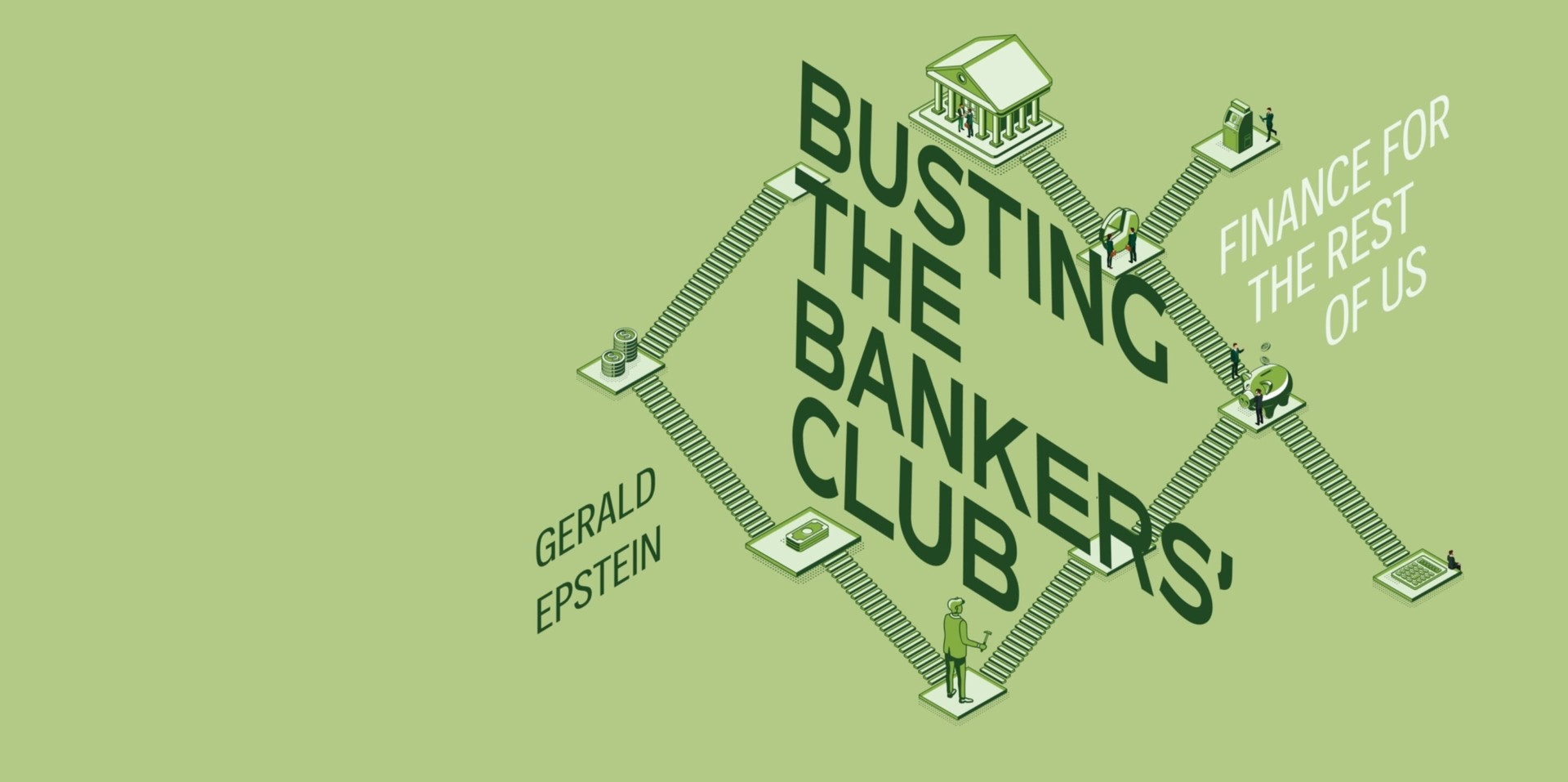
Busting the Bankers Club

Finance for the Rest of Us

Gerald Epstein gives an eye-opening account of the failures of the US financial system and what meaningful economic reform looks like.

Learn More
Our Mission

Ideas with Impact

At a time of dramatic change for scholarship and publishing, we collaborate with faculty, librarians, authors, and students to stay ahead of today’s knowledge demands and shape the future of publishing.

Learn More
New in Journals

Sound and Music Studies

Journal of Sound and Music in Games presents high-quality research concerning all areas of music and/or sound in games. 

Learn More

From Our Blog

Visit Our Blog

From Our Podcast: Beyond the Margins

Visit our channel
  • Listen to Jake Nabel, "The Arsacids of Rome: Misunderstanding in Roman-Parthian Relations" (U California Press, 2025)

    The Arsacids of Rome

    by Jake Nabel
    Mar 16 2026

    At the beginning of the common era, the two major imperial powers of the ancient Mediterranean and Near East were Rome and Parthia. In this  (open access) book The Arsacids of Rome: Misunderstanding in Roman-Parthian Relations (U California Press, 2025), Jake Nabel analyzes Roman-Parthian interstate politics by focusing on a group of princes from the Arsacid family—the ruling dynasty of Parthia—who were sent to live at the Roman court. Although Roman authors called these figures “hostages” and scholars have studied them as such, Nabel draws on Iranian and Armenian sources to argue that the Parthians would have seen them as the emperor’s foster-children. These divergent perspectives allowed each empire to perceive itself as superior to the other, since the two sides interpreted the exchange of royal children through conflicting cultural frameworks. Moving beyond the paradigm of great powers in conflict, The Arsacids of Rome advances a new vision of interstate relations with misunderstanding at its center.

    New Books in Late Antiquity is Presented by Ancient Jew Review.

    Jake Nabel is the Tombros Early Career Professor of Classical Studies and Assistant Professor of Classics and Ancient Mediterranean Studies at Pennsylvania State University.

    Michael Motia teaches Classics and Religious Studies at UMass Boston

  • Listen to Manuela Ceballos, "Between Dung and Blood: Purity, Sainthood, and Power in the Early Modern Western Mediterranean" (U California Press, 2025)

    Between Dung and Blood

    by Manuela Ceballos
    Mar 13 2026

    Manuela Ceballos’ new book Between Dung and Blood: Purity, Sainthood, and Power in the Early Modern Western Mediterranean (University of California Press, 2025) engages with the life and legacies of two sixteenth-century saints; the Spanish Christian Teresa de Jesús (also known as Teresa of Avila) and the Moroccan Sufi Sidi Ridwan al-Januwi. The book draws from rich Arabic and Spanish sources that moves us between Morocco and Iberia. In the process, we learn that these saints both descent from families of converts and as such blood and bodily pollution operated as material and metaphoric symbols to define their identities. Through this generative comparison, we see how constructions of blood and dung circulate across these varied but entangled temporal geographies to constitute notions of impurity and purity, such as in the case of the deathly hemorrhaging experienced by Teresa. In end though blood is used to set different boundaries around religious or racial identities, and even at times gender norms. As such, the discourses that are utilized for such argumentations are not stable, and so blood and how it is deployed is not the same across the stories of these two saints and their enduring legacies nor does it refract power consistently. This book will be of interest to those who think about embodiment, material culture, the early modern Mediterranean world, and Christian-Muslim mysticism.

    Manuela Ceballos is Assistant Professor of Religious Studies at the University of Tennessee, Knoxville.

    Shobhana Xavier is an Associate Professor of Religious Studies at Queen’s University. More details about her research and scholarship may be found here. She may be reached at shobhana.xavier@queensu.ca.

  • Listen to Imperial Depths: Mark Letteney and Matthew Larsen on the Roman Prison System (JP)

    by Imperial Depths: Mark Letteney and Matthew Larsen on the Roman Prison System (JP)
    Mar 12 2026

    The notion of abolishing prisons strikes some as an impossible dream: could we could reasonably conceive of a society that responded to harm without the possibility of long-term confinement in purpose-built institutions? To others, we already have a template. Didn’t Michel Foucault long ago show us that prisons as they exist now–in all their horror, in all their commitment not just to jail people before trial but also to imprison them afterwards–come about only in the modern episteme, concomitant with capitalism and all sorts of attendant evils?

    Actually, nope. Prisons are as old as the Romans and very likely much older than that. In Ancient Mediterranean Incarceration (California, 2025). Mark Letteney (a U Washington historian who wrote The Christianization of Knowledge in Late Antiquity)directs excavations in a legionary amphitheater) and Matthew Larsen (University of Copenhagen, author of Gospels before the Book) document an ancient and durable prison system system with five key features: Centrality, surveillance, separation depth, and punitive variability.

    Their RTB conversation explores key aspects of that system and its present-day legacy or parallels. Yet it ends on a note of cautious optimism from Letteney: just because we don’t find a prison-free world in ancient Rome is no reason to give up the struggle. Whatever better solution to societal safety and rehabilitation awaits us in the future, it must be something we ourselves set out to build anew.

    Mentioned

    Michel Foucault’s foundational Discipline and Punish (1975)

    Adam Gopknik reviews Ancient Mediterranean Incarceration in The New Yorker

    The Rules of Ulpian (3rd century jurist)

    Wengrow and Graeber’s foundational and heavily debated The Dawn of Everything (2021)

    Spencer Weinreich’s work on solitary confinement)

    Erving Goffman Stigma (1963) and Asylums (1961)

    Livy (eg in his History of Rome on prisons and prisoners

    Who  Would Believe a Prisoner? Edited by Michelle Daniel Jones and Elizabeth Angeline Nelson

    Libanius (on the abuse of Prisoners)

    Fyodor Dostoyevsky. The House of the Dead

    Samuel Delany Tales of Neveryon

  • Listen to Britt Paris, "Radical Infrastructure: Imagining the Internet from the Ground Up" (U California Press, 2025)

    Radical Infrastructure

    by Britt Paris
    Mar 09 2026

    We are glad to talk to Britt Paris about her book Radical Infrastructure: Imagining the Internet from the Ground Up (U California Press, 2025). 

    This book asks: What if we could start over and build the Internet from scratch? For more than eight years, Britt S. Paris investigated alternative Internet infrastructure projects, conducting interviews, site visits, and policy analysis. In this expansive and interdisciplinary study, Paris critically examines  how people and groups imagine,  build, deploy, maintain, and use the Internet as they survive—and even dare to thrive—in challenging political, economic, and environmental contexts. The book is available (to download for free!) here.

    Your host is Megan Finn, Associate Professor at American University and Affiliate Associate Professor at University of Washington.