University of California Press

About the Book

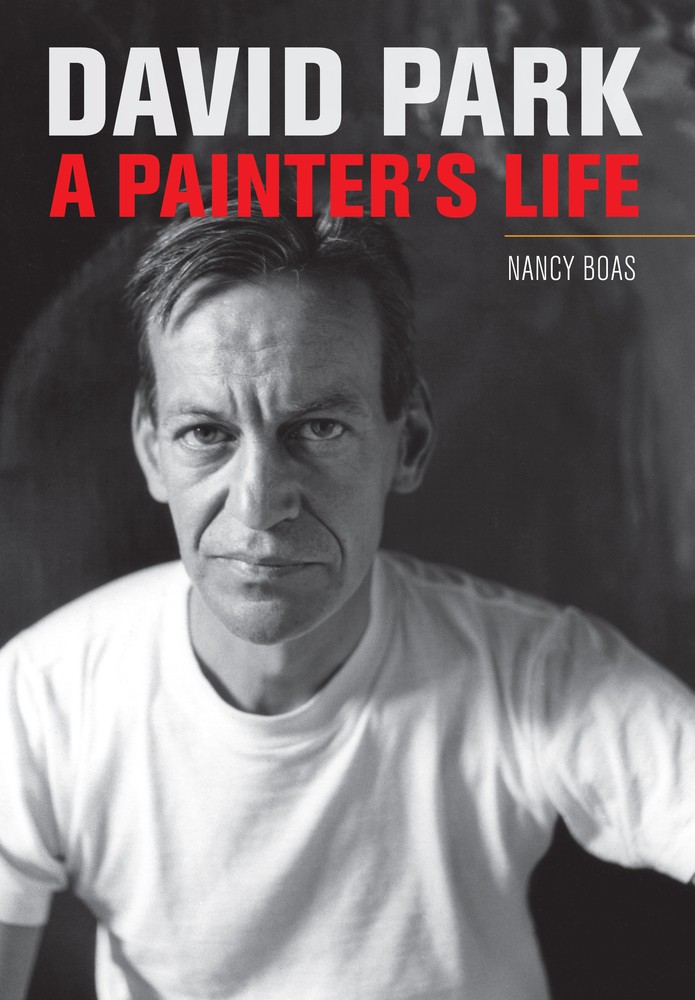
David Park (1911–1960), transplanted Bostonian turned ground-breaking West Coast painter, led the way in creating what became known as Bay Area Figurative Art—a daring move during the post-World War II years when abstract expressionism held sway. In this beautifully illustrated biography, compiled from comprehensive and sweeping interviews, Nancy Boas traces Park’s resolute search for a new kind of figuration, one that would penetrate abstract expressionism’s thickly layered surfaces and infuse them with human presence. Boas changes our understanding of Park as a painter, highlighting his strong influence on Richard Diebenkorn, Elmer Bischoff, and other artists at the California School of Fine Arts and the University of California, Berkeley. She plunges us into the lively 1940s and 1950s Bay Area art scene, pointing to Park’s work as a bold alternative to the abstractions of Clyfford Still. As the book deepens our admiration for Park’s figurative paintings, it affirms his stature as a major figure in American art, one who spurred the figurative impulse across the United States and abroad.
About the Author

Nancy Boas is the author of The Society of Six: California Colorists (UC Press) and a contributor to the exhibition and catalog Facing Eden: 100 Years of Landscape Art in the Bay Area (UC Press). She was Adjunct Curator of American Paintings at the Fine Arts Museums of San Francisco and co-curated the exhibition California Colorists: Paintings by the Society of Six.

From Our Blog

A Major David Park Retrospective

The first major museum exhibition in more than 30 years presenting the powerfully expressive work of David Park (1911–1960), opened on June 2 at The Modern Art Museum of Forth Worth. The exhibition was organized by the San Francisco Museum of Modern Art, whom we are proud to have co-published the ge
Read More

Table of Contents

Prologue. Values, Not Scenes

1. First Years, 1911–1928
2. Out West, 1928–1930
3. New Friends, 1931–1934
4. Genesis, 1934–1936
5. Back East, 1936–1941
6. The War Effort, 1941–1944
7. The California School of Fine Arts, 1945–1946
8. In the Studio, 1946–1949
9. I Call Them Pictures, 1950–1953
10. A Single Self, 1953–1955
11. From Domestic Scenes to Bathers and Nudes, 1955–1958
12. Image and Void, 1958–1959
13. End Story, 1959–1960
14. The Life of the Work, after 1960

Coda. The Blaze in the Darkness

Acknowledgments
Notes
Selected Bibliography
List of Illustrations
Index

Reviews

“Anyone who believes that art has exhausted the mystery of the human figure hasn't looked hard enough at Park's last decade of paintings. Park died young in 1960, at 49. His life didn't echo the martyrologies of van Gogh or Pollock. Yet it didn't lack for drama. You'll find it in Nancy Boas' much-needed and thorough biography, "David Park: A Painter's Life" - poignant yet understated, judicious yet packed with vivid camera-ready scenes, should a filmmaker dare to adapt it. Even insiders who thought they knew this complicated artist will know him far better thanks to Boas.”
San Francisco Chronicle
"The first full biographical portrait, not a memoir, of Park (1911-1960), the reticent founder of Bay Area Figuration, the region's only modern art movement so far to win global recognition."
San Francisco Chronicle
“What David Park: A Painter's Life accomplishes is to deepen our understanding of an artist who celebrated humanity, friendship and connection. Just as Park put the humanity back into an era of abstraction, Boas brings David Park the man into the foreground in a literary and historical sense. She has given us a detailed, truthful, credible picture of a man who tussled with the lofty claims made for abstract art. Somehow he made peace with abstraction, but he had to do it by putting human presence, in all its beautiful imperfection, into the forefront once again.”
Huffington Post
“Boas draws on 20 years of interviews and research to tell the story of how Park came to spearhead Bay Area Figurative art, spawning Richard Diebenkorn, Elmer Bischoff, Joan Brown and others. This welcome volume is the first full biography of a Northern California artist.”
Los Angeles Times
“A balanced and analytical account; [Boas’s] passion shows in how persuasively she argues for a wider recognition of Park’s importance as more than the locally esteemed leader of the Bay Area Figuratives.”
Art Critical
“Shows how Park conferred a human presence on the painting of his time, influencing artists such as Richard Diebenkorn and Elmer Bischoff.”
San Jose Mercury News
“[A project] put together with care.”
San Francisco Chronicle
“In the 1950s, the San Francisco Bay Area was an epicenter for new thinking and artistic exploration. At the center of this explosion was the painter David Park, whose bold colors and everyday subjects helped usher in a new modernism.”
Berkeleyside
“Boas' much-needed and thorough biography tells the tragic story of the San Francisco artist.”
San Francisco Chronicle
“An enthralling read.”
San Francisco Magazine
"At last a reliable and enlightening biography of David Park—one of America's most original artists. Boas fills in the many gaps of Park's life, all of which influenced his art."—Richard Armstrong, Director, Solomon R. Guggenheim Museum and Foundation

“This book makes a very important contribution to the literature on David Park and on Bay Area art from the 1930s through the 1950s more generally. Nancy Boas has done a tremendous amount of research on her subject, presenting totally new information on Park’s art and life in polished prose that will attract a wide audience within the art world. There is no question that this will become the standard biography on Park.”—Steven Nash, Executive Director, Palm Springs Art Museum

“This is a well-researched, engaging, and informative biography, detailing the life and work of one of California’s most important modern artists. Nancy Boas inspires a deep admiration for David Park’s late figurative paintings, and anyone with an interest in Park and his milieu will find this a valuable and engrossing book.”—David Cateforis, Professor of Art History, University of Kansas