
About the Book
In 1941, as a Red Army soldier fighting the Nazis on the Belarussian front, Janusz Bardach was arrested, court-martialed, and sentenced to ten years of hard labor. Twenty-two years old, he had committed no crime. He was one of millions swept up in the reign of terror that Stalin perpetrated on his own people. In the critically acclaimed Man Is Wolf to Man, Bardach recounted his horrific experiences in the Kolyma labor camps in northeastern Siberia, the deadliest camps in Stalin’s gulag system.
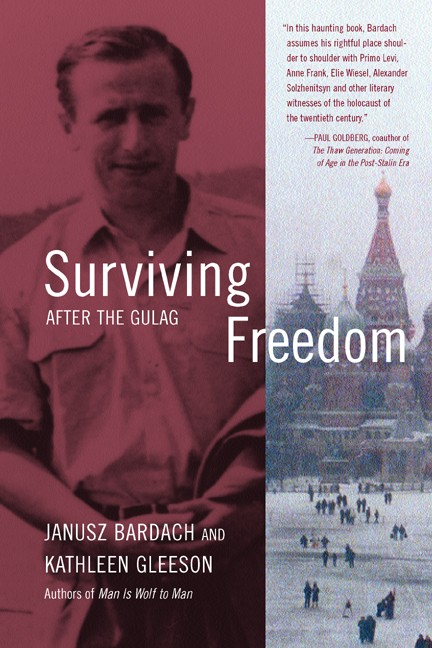
In this sequel Bardach picks up the narrative in March 1946, when he was released. He traces his thousand-mile journey from the northeastern Siberian gold mines to Moscow in the period after the war, when the country was still in turmoil. He chronicles his reunion with his brother, a high-ranking diplomat in the Polish embassy in Moscow; his experiences as a medical student in the Stalinist Soviet Union; and his trip back to his hometown, where he confronts the shattering realization of the toll the war has taken, including the deaths of his wife, parents, and sister.
In a trenchant exploration of loss, post-traumatic stress syndrome, and existential loneliness, Bardach plumbs his ordeal with honesty and compassion, affording a literary window into the soul of a Stalinist gulag survivor. Surviving Freedom is his moving account of how he rebuilt his life after tremendous hardship and personal loss. It is also a unique portrait of postwar Stalinist Moscow as seen through the eyes of a person who is both an insider and outsider. Bardach’s journey from prisoner back to citizen and from labor camp to freedom is an inspiring tale of the universal human story of suffering and recovery.
In this sequel Bardach picks up the narrative in March 1946, when he was released. He traces his thousand-mile journey from the northeastern Siberian gold mines to Moscow in the period after the war, when the country was still in turmoil. He chronicles his reunion with his brother, a high-ranking diplomat in the Polish embassy in Moscow; his experiences as a medical student in the Stalinist Soviet Union; and his trip back to his hometown, where he confronts the shattering realization of the toll the war has taken, including the deaths of his wife, parents, and sister.
In a trenchant exploration of loss, post-traumatic stress syndrome, and existential loneliness, Bardach plumbs his ordeal with honesty and compassion, affording a literary window into the soul of a Stalinist gulag survivor. Surviving Freedom is his moving account of how he rebuilt his life after tremendous hardship and personal loss. It is also a unique portrait of postwar Stalinist Moscow as seen through the eyes of a person who is both an insider and outsider. Bardach’s journey from prisoner back to citizen and from labor camp to freedom is an inspiring tale of the universal human story of suffering and recovery.