University of California Press

About the Book

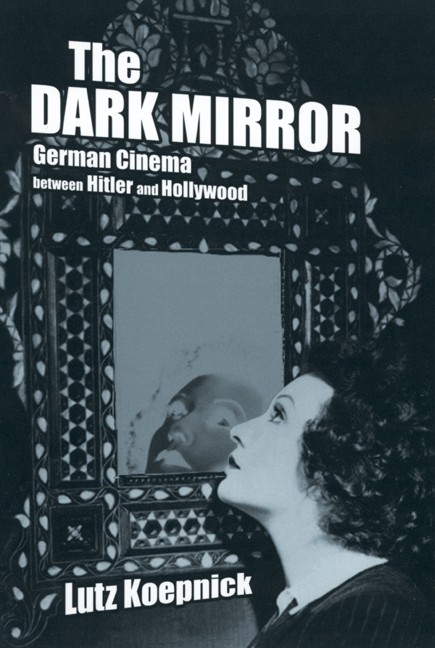
Lutz Koepnick analyzes the complicated relationship between two cinemas—Hollywood's and Nazi Germany's—in this theoretically and politically incisive study. The Dark Mirror examines the split course of German popular film from the early 1930s until the mid 1950s, showing how Nazi filmmakers appropriated Hollywood conventions and how German film exiles reworked German cultural material in their efforts to find a working base in the Hollywood studio system. Through detailed readings of specific films, Koepnick provides a vivid sense of the give and take between German and American cinema.

About the Author

Lutz Koepnick is Associate Professor of German and Film and Media Studies at Washington University in St. Louis. He is the author of Walter Benjamin and the Aesthetics of Power (1999) and Nothungs Modernität: Wagners Ring und die Poesie der Macht im neunzehnten Jahrhundert (1994).

Table of Contents

List of Illustrations
Acknowledgments
Introduction: The Dark Mirror

PART 1: HOLLYWOOD in BERLIN, 1933–1939
Chapter 1 Sounds of Silence: Nazi Cinema and the Quest for a National Culture Industry
Chapter 2 Incorporating the Underground: Curtis Bernhardt’s The Tunnel
Chapter 3 Engendering Mass Culture: Zarah Leander and the Economy of Desire
Chapter 4 Siegfried Rides Again: Nazi Westerns and Modernity
PART 2: BERLIN in HOLLYWOOD, 1939–1955
Chapter 5 Wagner at Warner’s: German Sounds and Hollywood Studio Visions
Chapter 6 Berlin Noir: Robert Siodmak’s Hollywood
Chapter 7 Pianos, Priests, and Popular Culture: Sirk, Lang, and the Legacy of American Populism
Chapter 8 Isolde Resurrected: Curtis Bernhardt’s Interrupted Melody

Epilogue: ""Talking about Germany""
Notes
Index

Reviews

"Lutz Koepnick's The Dark Mirror provides one of the finest, most compelling and suggestive accounts to date of the multiple locations of German cinema between Hitler and Hollywood. Charting the shifting relationships between institutional contexts and individual acts of reception, Koepnick persuasively shows how the German cinema and its filmmakers—both in exile and in Nazi Germany—contributed to a fragile, stratified, indeed, "nonsynchronous" public sphere."—Patrice Petro, author of Aftershocks of the New: Feminism and Film History

"Lutz Koepnick's brilliant study debunks the received wisdom concerning Nazi German and Hollywood film of the 1930s and 40s. Using detailed analyses of 8 films, with special focus on sound and music, he insists upon the disjointed contexts and uneven relationships of American and German filmmaking. Historically nuanced and theoretically savvy, this remarkable book offers something for everyone: Americanists, Germanists, historians, students of cinema sound and music, those interested in debates between art and popular forms, and European and Hollywood production."—Caryl Flinn, author of Strains of Utopia