University of California Press

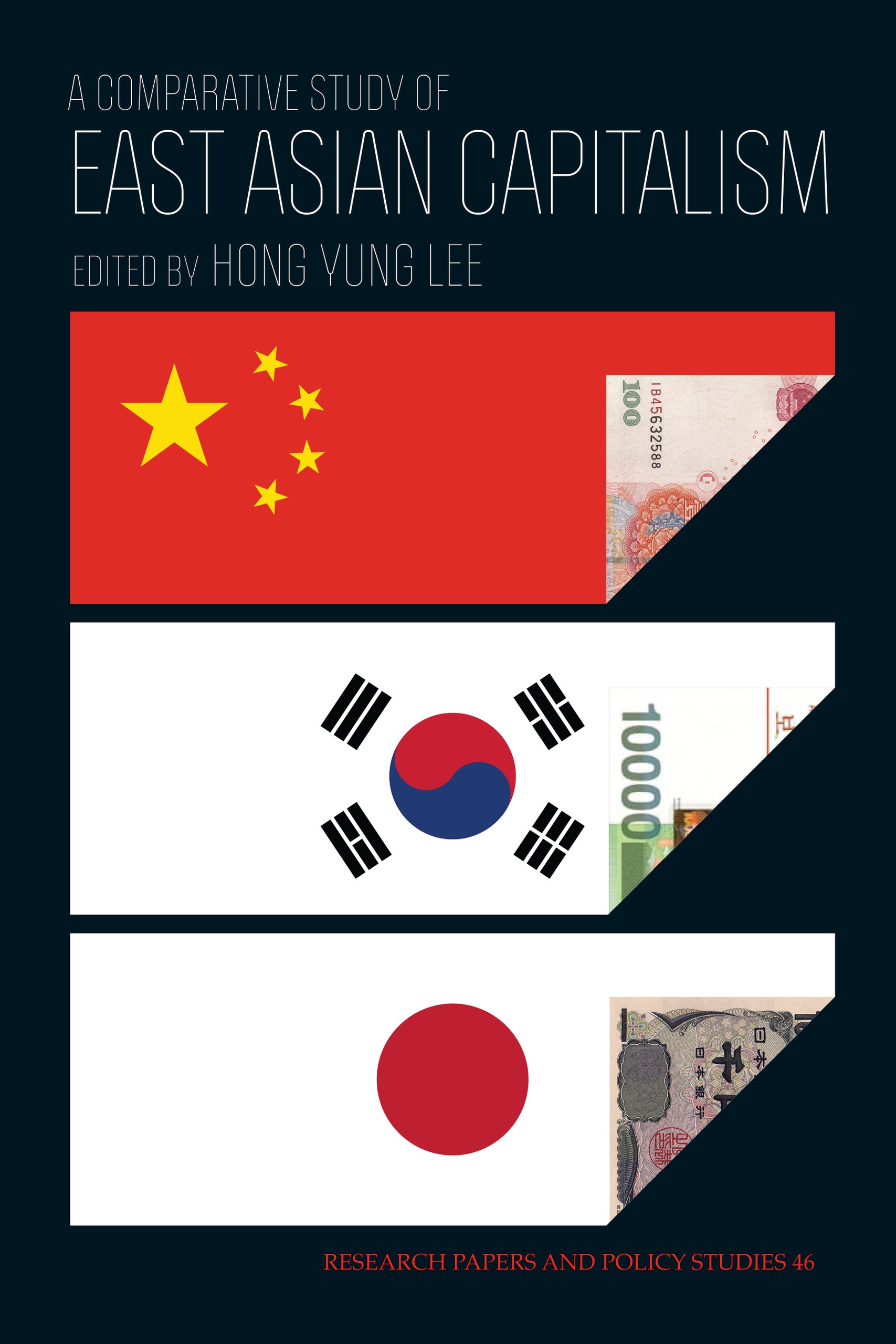
A Comparative Study of East Asian Capitalism


by Hong Yung Lee (Author)
Price: $32.00 / £27.00
Publication Date: Aug 2014
Publisher: Institute of East Asian Studies, University of California, Berkeley
Imprint: Institute of East Asian Studies, University of California, Berkeley
Title Details:
Rights: World
Pages: 302
ISBN: 9781557291677
Trim Size: 6 x 9
Series:
  • Research Papers and Policy Studies

About the Book

This book is an initial attempt to compare China, Japan, and South Korea, three close geographical and cultural neighbors whose development trajectories, though previously divergent, have been moving more recently toward convergence. This edited volume examines similar institutions in similar functional areas within the three countries. To understand the findings, the authors suggest a working concept of "institutional templates," a framework that considers the ways in which each country is oriented toward authority, exchange, and networks. We hope that the book as a whole will demonstrate the intellectual utility of a broad comparative study of East Asian economic development.

About the Author

Hong Yung Lee is professor emeritus of political science at the University of California, Berkeley. His reseach focuses on the states and economies of East Asia. He has edited several publications, including Korean Options in a Changing International Order (IEAS, 1993), Prospects for Change in North Korea (IEAS, 1994), and A Comparative Study of East Asian Capitalism (IEAS, 2014). Education: B.A., Yonsei University; Ph.D., University of Chicago

Table of Contents

Contributors – vii

Part I. Introduction

1. Précis
    Hong Yung Lee
2. Convergence and Divergence: Three Paths toward Modernization in East Asia
    Hong Yung Lee

Part II. Financial and Labor Reforms

3. Government Intervention for Resolving Non-Performing Loans in Japan and South Korea, 1998–2006
    Myung-koo Kang
4. Financial Reform in China: The Chinese Style of Marketization
    Hong Yung Lee
5. The Double Movement and New Labor Market Regulations in Korea, Japan, and Taiwan
    Ji-Whan Yun

Part III. Corporate Governance

6. Moving toward a Hybrid System in Japan: The Case of Corporate Governance Reform
    Hideaki Miyajima and Yul Sohn
7. Corporate Governance Reform in Korea in the Post– Asian Financial Crisis Era
    Joongi Kim
8. The Evolutionary Path of Corporate Governance in China: The Interdependent Model of State-Owned Enterprises
    and Private Enterprises
    Pingqing Liu, Junxi Shi, and Fengxia Jiang
9. Multiple Institutional Templates for Corporate China: The Evolution of Industrial Networks during Marketization
    Lowell Dittmer and Kun-Chin Lin

Part IV. Networks

10. The Changing Face of Network Capitalism in Korea: A Study of the Corporate Board of Directors' Network
      Yong-Hak Kim and Yong-Min Kim
11. The Political Economy of Informal Networks in Japan and South Korea: Amakudari vs. Parachute Appointment
      Seungjoo Lee and Sang-Young Rhyu

Reviews

“The level of detail displayed and thorough coverage of the historic subtleties of economic development in each country must be applauded. The book provides an extremely useful insight and factual repository into the micromechanisms of many aspects of capitalism across East Asia.… [I]n that it more than satisfies its stated aim of alerting scholars to the urgent need for a comprehensive theory that can cover the remarkable economic performances of China, Japan, and South Korea, this book is a resounding success.”—Alison Hulme, Royal Holloway, University of London, Pacific Affairs 89, no. 2 (June 2016): 401–402.