University of California Press

About the Book

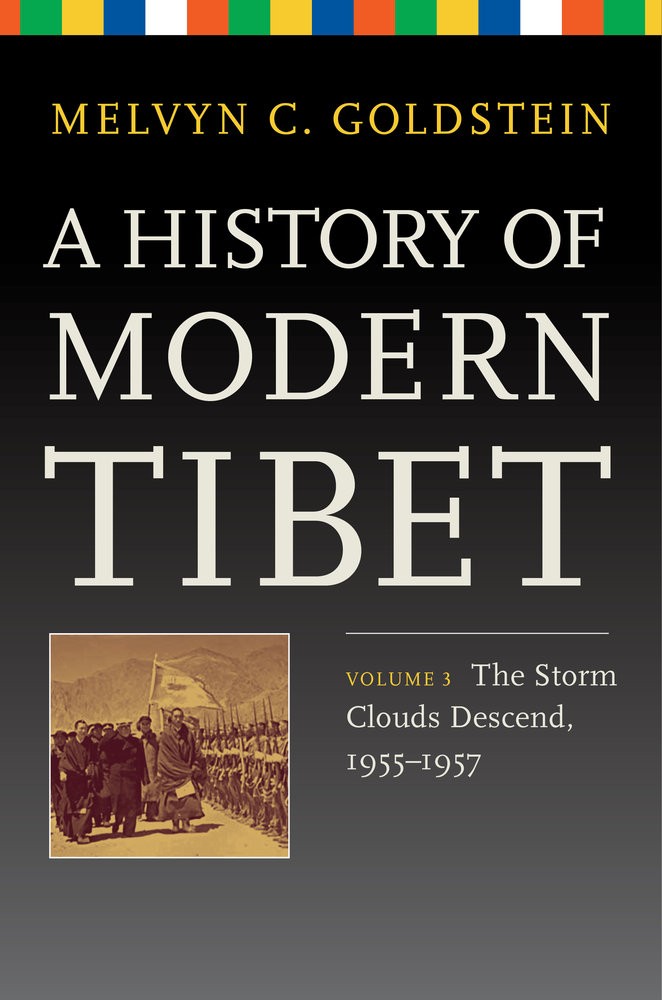
It is not possible to fully understand contemporary politics between China and the Dalai Lama without understanding what happened in the 1950’s. The third volume in Melvyn Goldstein's History of Modern Tibet series, The Calm before the Storm, examines the critical years of 1955 through 1957. During this period, the Preparatory Committee for a Tibet Autonomous Region was inaugurated in Lhasa, and a major Tibetan uprising occurred in Sichuan Province. Jenkhentsisum, a Tibetan anti-communist émigré group, emerged as an important player with secret links to Indian Intelligence, the Dalai Lama’s Lord Chamberlain, the United States, and Taiwan. And in Tibet, Fan Ming, the acting head of the CCP’s office in Lhasa, launched the “Great Expansion,” which recruited many thousands of Han Cadres to Lhasa in preparation for beginning democratic reforms, only to be stopped decisively by Mao Zedong’s “Great Contraction” which sent them back to China and ended talk of reforms in Tibet for the foreseeable future. In Volume III, Goldstein draws on never-before seen Chinese government documents, published and unpublished memoirs and diaries, and invaluable in-depth interviews with important Chinese and Tibetan participants (including the Dalai Lama) to offer a new level of insight into the events and principal players of the time. Goldstein corrects factual errors and misleading stereotypes in the history, and uncovers heretofore unknown information on the period to reveal in depth a nuanced portrait of Sino-Tibetan relations that goes far beyond anything previously imagined.

About the Author

Melvyn C. Goldstein is John Reynolds Harkness Professor in Anthropology, Codirector of the Center for Research on Tibet at Case Western Reserve University, and a member of the National Academy of Sciences. He is the author of many books on Tibet, including A Tibetan Revolutionary: The Political Life and Times of Bapa Phüntso Wangye (with Dawei Sherap and William R. Siebenschuh), Essentials of Modern Literary Tibetan: A Reading Course and Reference Grammar, and volumes 1 and 2 of A History of Modern Tibet, all published by UC Press.

Table of Contents

List of Illustrations
Preface
Acknowledgments
List of Abbreviations
Glossary of Key People and Terms
Ganzi County Names in Tibetan and Chinese

1. First Steps
2. Pushback
3. Mao’s “Socialist Transformation Campaign” and Democratic Reforms in Sichuan
4. The Khamba Uprising Begins
5. The Rise of Jenkhentsisum
6. Jenkhentsisum Expands and India Invites the Dalai Lama
7. The Mönlam Incident of 1956 and Its Aftermath
8. The Chinese Government Responds to the Uprising
9. The Preparatory Committee for the Tibet Autonomous Region (PCTAR)
10. Fan Ming’s “Great Expansion”
11. The Dalai Lama Visits India
12. The Khambas, JKTS, and the CIA
13. The Dalai Lama Returns
14. The “Great Contraction” and the “Great Discontinuance”
15. Final Thoughts

Appendix A. Appeal of Thubten Nyenjik [JKTS] to the Queen of England
Appendix B. Correct Tibetan Spellings
References
Index

Reviews

"Highly Recommended."
CHOICE
"[The] analysis in Melvyn Goldstein’s great history are invaluable and incomparable. Goldstein reveals the deeper, often disconcerting record."
New York Review of Books
"This volume, like the previous two, is the most comprehensive account of Tibet’s modern history and its interaction with China that no other existing books can match. The scholarship is superior. The amount of primary sources employed and the author’s capability in synthesizing massive materials into a coherent, easy to digest narrative is unparalleled."—Ho-fung Hung, Associate Professor of Sociology at The Johns Hopkins University and author of Protest with Chinese Characteristics

"This volume continues Goldstein’s foundational contribution to understanding the history of modern Tibet. On a topic contested by contradictory memories, interests, and politics, Goldstein provides a unique breadth of documents and interviews as well as his own narrative. With this book in hand, all serious future research will have to begin with a much broader and more complex reality than hitherto has been possible."—Brantly Womack, Miller Center C K Yen Chair and Professor of Foreign Affairs, U. of Virginia

Praise for previous volumes:

“Impressively meticulous. [A] wealth of well-ordered detail and primary source material, both Tibetan and Chinese.”—Times Literary Supplement (TLS)

“An excellent and gripping read not only for historians.”—Vineeth Mathoor, Jawaharlal Nehru University, New Delhi South Asia Research

“A prodigious piece of scholarship drawing on an extensive range of primary sources and interviews . . . . As an in-depth study of Sino-Tibetan relations in this period it is currently unmatched.”—Alex McKay New Zealand Journal Of Asian Studies