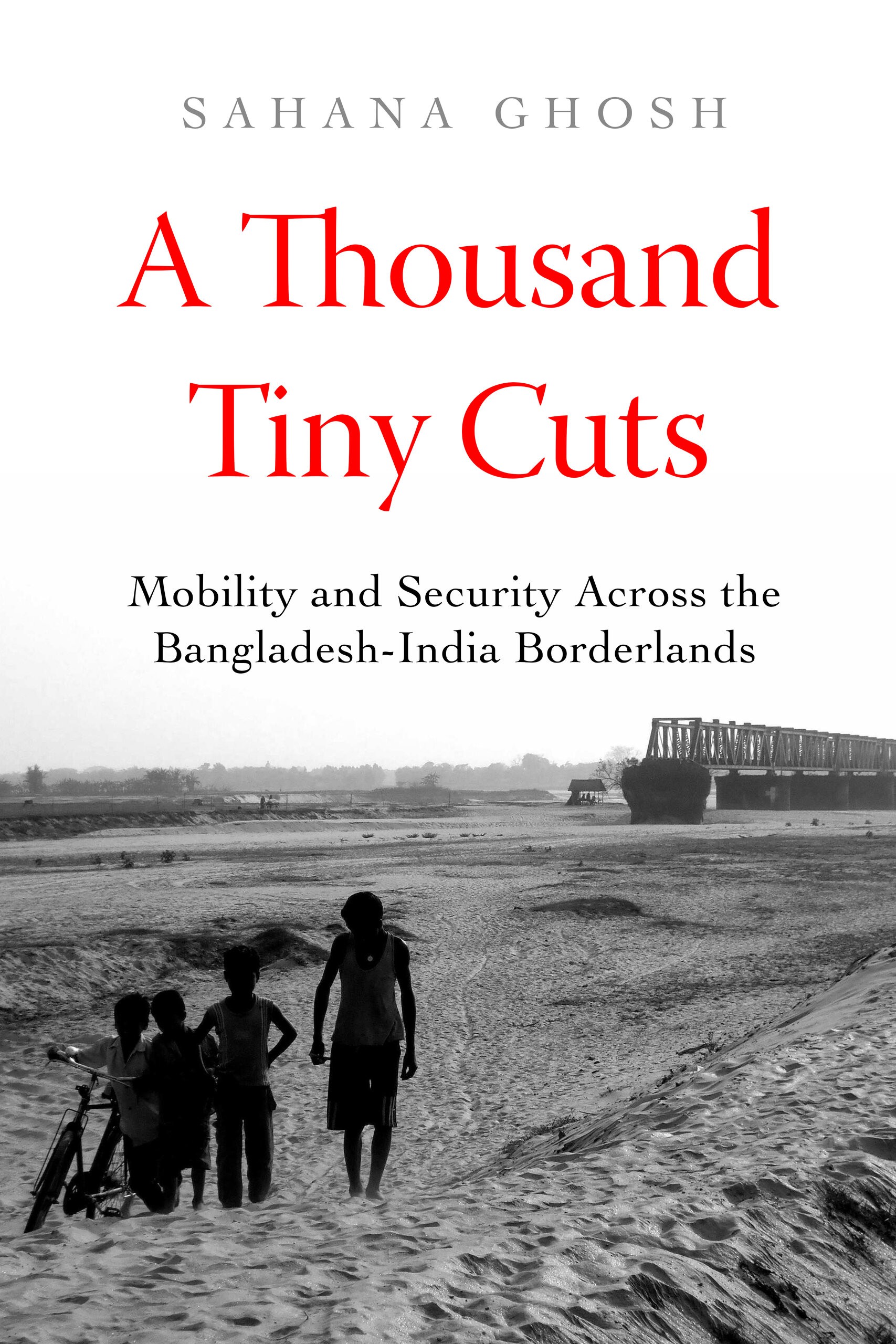
"The book takes the reader on an intimate journey into the lives of those dwelling in the Bangladesh–India borderlands. In doing so, it offers a radical reimagining of what borders mean and how they shape everyday experiences. Using dazzling ethnographic description and creative theoretical framings, Ghosh challenges conventional understandings of borders as fixed lines demarcating sovereign territories."
— Social Anthropology/Anthropologie sociale
“This book is an exemplary work in the field of anthropology of borderlands in South Asia, with extremely rich ethnographic and historical details coupled with nuanced conceptual and methodological lenses and critical sensibilities. The insights availed in this layered and beautifully narrated text allow us to converse with the author on the numerous possibilities of further reflections and intriguing questions.”
— Contributions to Indian Sociology
"In this stunning ethnography of borderland life, Sahana Ghosh reveals how the India-Bangladesh border is made and felt not only in barbed wire and checkpoints, but also in smuggled cumin and shampoo, in walking and teasing, and in family ties that are both frayed and cemented."—Ilana Feldman, Professor of Anthropology, History, and International Affairs, George Washington University
"This moving, masterful ethnography reveals the layered historical cartographies and social relations of the Bangladesh-India borderlands. From colonial infrastructural debris to gendered intimate relations and illicit economic exchanges, Ghosh poignantly illustrates how national security, surveillance, and policing cut into people’s gendered, transnational, everyday lives on both sides of the 'friendly' border."—Nicole Constable, Professor and Chair, Department of Anthropology, University of Pittsburgh
"A Thousand Tiny Cuts is at the cutting edge of scholarship on migration, security, and citizenship. In Ghosh’s account, the Bangladesh-India border is both threat and possibility. It makes the everyday lives of borderland inhabitants volatile and precarious while generating cross-border ties of kinship and livelihood. This exquisitely textured ethnography illuminates a transnational political economy of differentially valued spaces, peoples, and goods. A truly impressive achievement."—Ajantha Subramanian, Mehra Family Professor of South Asian Studies, Harvard University