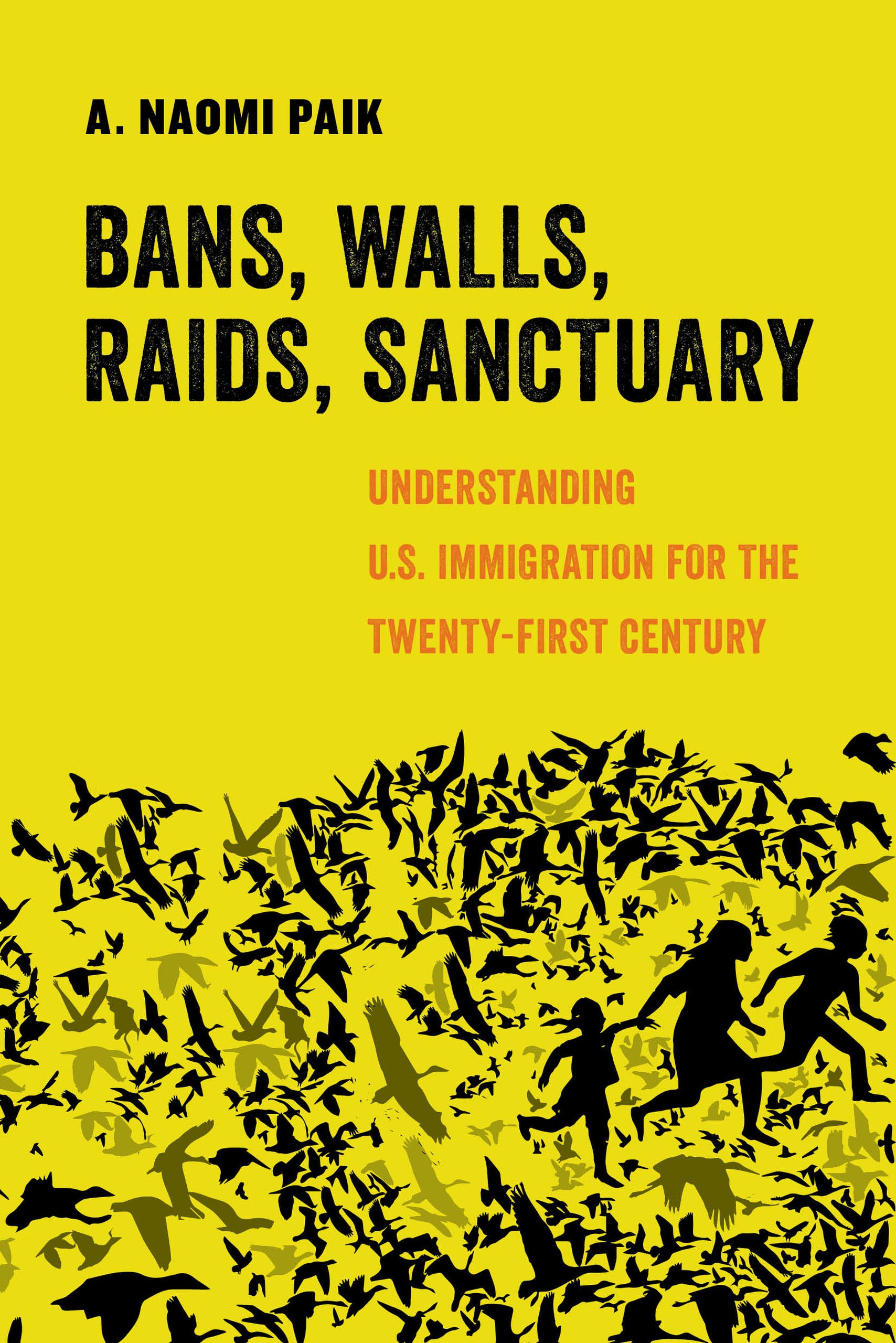
"If you have wondered ‘how did we get here?' Naomi Paik has an answer for you. This short but powerfully written book shows how the Trump administration’s reliance on raids, bans, and physical barriers builds on a longer history of immigration restriction. Alongside this painful history is an equally long history of pro-immigrant activism, and Paik reminds us of the many ways people of conscience have also shaped immigration policy. This is an essential read for those seeking clarity on one of the most divisive issues of our times. The book will be important long after the current electoral cycle is done."—María Cristina García, author of The Refugee Challenge in Post–Cold War America
"Bans, Walls, Raids, Sanctuary contextualizes our current reality in a long legacy of racial exclusion in America. If we are to realize a healthy, multiracial democracy in the United States, we must face and learn from this history—understanding it can help us make meaning of the cruelty of our current era in immigration policy and can ultimately put an end to it. We cannot continue on this path. This book reveals a generational opportunity to turn the country in a new direction toward a more just, equitable, and inclusive future for all Americans."—Ai-jen Poo, Executive Director of the National Domestic Workers Alliance and Cofounder of Families Belong Together
"Bans, Walls, Raids, Sanctuary provides a much-needed historical analysis of our current political moment. It lays outs the policies and intentional decisions that were in place long before Trump and that paved the way for his attacks on immigrant communities. The book invites us to explore abolitionist sanctuary as a counter to the current administration's attacks."—Arianna Salgado, organizer with Organized Communities Against Deportations
"In my organizing work with undocumented communities, I have a lot of difficult conversations about criminalization and the history of racist, xenophobic laws in the United States. Naomi Paik's book has helped me through these conversations. I could not wait for it to be published so that I could point to it as a resource for people to read and understand that racism and xenophobia are part of this nation’s history. Now I can share it as part of our organizing work."—Irene Romulo, organizer with Organized Communities Against Deportations