University of California Press

About the Book

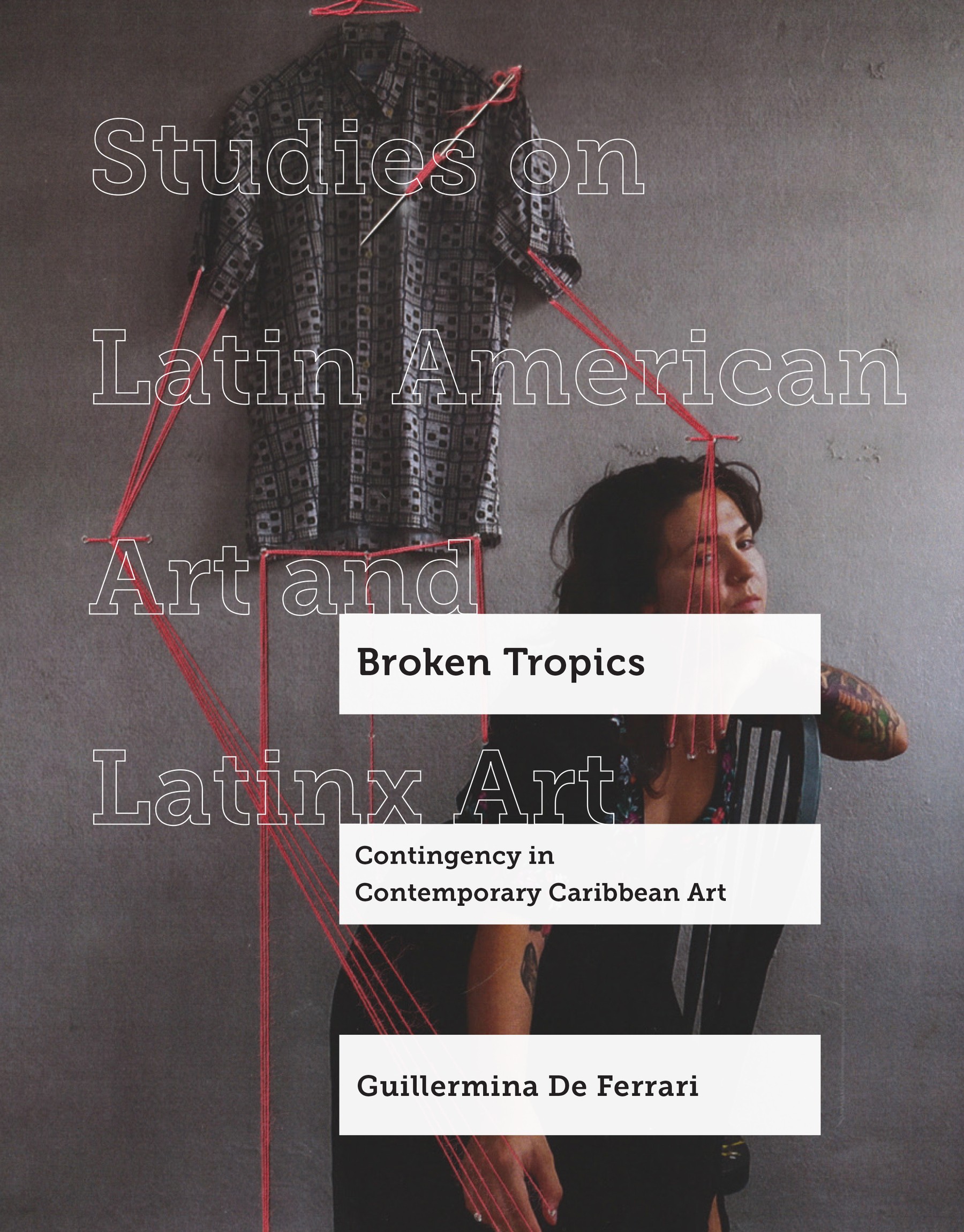
Broken Tropics examines contemporary art installations, performances, photography, and street art from three primary sites of compounding vulnerability: Cuba, Haiti, and Puerto Rico. Guillermina De Ferrari poses two central questions: How does contingency affect our humanness, and what does art making under duress say about being human? With the understanding that being human is a praxis and that art is a practical philosophy, De Ferrari introduces the notion of an “art of contingency.” This creative practice engages with the accidental and the unexpected to highlight two contradictory facts: that uncertainty is a predictable feature of Caribbean life and that, nonetheless, misfortune does not have to be fate. Placing long-standing concerns about social, political, and economic injustice on a continuum with the concerns of disaster studies and ecocriticism, Broken Tropics shows how people reshape and reinvent the social world in response to external pressures, and how the arts envision new forms of living in a broken world.

About the Author

Guillermina De Ferrari is Halls-Bascom Professor of Caribbean Literature and Visual Culture at the University of Wisconsin–Madison. She is author of Vulnerable States: Bodies of Memory in Contemporary Caribbean Fiction; Community and Culture in Post-Soviet Cuba; and Apertura: Photography in Cuba Today.

Reviews

"Broken Tropics is a profound and timely intervention into the field of Caribbean visual studies, to reveal how art making becomes a radical act of life making. Centering Puerto Rican, Cuban, and Haitian 'arts of contingency,' Guillermina De Ferrari moves beyond the binary of structural oppression and individual resistance to mediate on how we remain human in an increasingly broken world."—Yolanda Martínez San Miguel, University of Miami

"Broken Tropics is an elegantly written and conceptually challenging intervention. Working through the historical, political, and ecological adversities afflicting Cuba, Haiti, and Puerto Rico, De Ferrari asks the disarmingly poignant question: What does Caribbean art want? The book offers a complex response that reframes art critical debates."—David Scott, Columbia University

"This is a brilliant, original book. Engaging with contemporary Caribbean art for its practices of care, it contributes in new ways to philosophical thinking about contingency and precarity in relation to the multiple crises of our times: climate change, debt, hunger, the legacies of enslavement, and neocolonial manifestations of both capitalism and socialism."—Esther Whitfield, Brown University

“A beautiful, brilliant, necessary book. In her simultaneous engagement with contemporary ethics and aesthetics, De Ferrari’s intervention manages to be concrete and specific in its portrayal of Caribbean environments and histories even as it reaches beyond the region. This is a vital contribution to art and the humanities, prompting us to think about the ways in which we, too, can craft ethical responses in these times of impure agency."—Emily A. Maguire, Northwestern University