University of California Press

About the Book

A free ebook version of this title is available through Luminos, University of California Press's Open Access publishing program. Visit www.luminosoa.org to learn more.

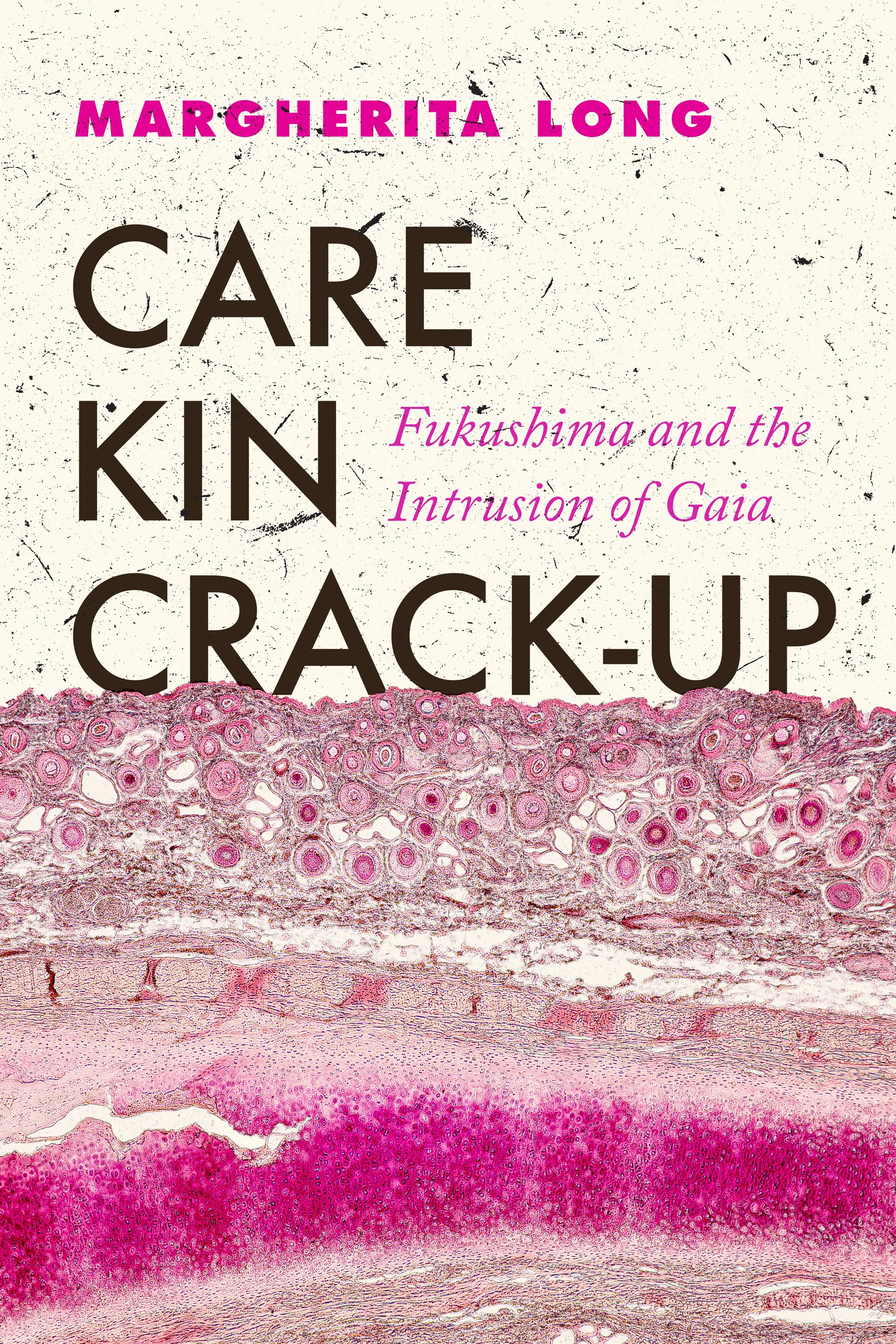
How does an environmental crisis become the impetus for a kind of caring that is also intense thinking? Care, Kin, Crack-Up examines Japanese literature and activist narratives to show people at their most creative when struggling to engage Gaia: earth, intrusion, life. Faced with Fukushima, how did they trace nuclear enormity along thin lines of immanence and sense? Into incorporeal cracks rather than debilitating crack-ups? Margherita Long opens environmental humanities in new feminist directions using ideas from Indigenous studies, disability studies, science and technology studies, and Deleuze. This book maps new problems, like the gendered politics of the nuclear disaster, to reframe old ones, like Japan's peace constitution, military sexual slavery, and Minamata mercury poisoning. 

About the Author

Margherita Long is Professor of East Asian Studies at the University of California, Irvine, and author of This Perversion Called Love: Reading Tanizaki, Feminist Theory, and Freud.

Table of Contents

Contents

Acknowledgments

Introduction: A Flow Connecting Everything

1. What Can a Radiation Brain Think? Hayashi, Kimura, Kobayashi

2. Ōe and the Semiotics of Neurodiversity: This Margin Which Is Not One

3. On Being Worthy of the Event: Activist Narratives, Fukushima Stoics

4. Undercommons: Kin, Care and Pedagogy in Fukushima Documentary

Coda: Intelligence, Care, Mothers

Works Cited

Index

Reviews

“A moving, articulate, and powerful reflection on the afterlives engendered in Fukushima’s nuclear accident—those of survivors, along with teachers, doctors, filmmakers, and writers, who expand and spread a mode of care and research that creates new forms of living, alongside new types of art, science, and ethics. This is a book about what lives and develops ways of thriving, new forces and forms of engagement with the world, even under the most complex, convoluted, and difficult conditions.”—Elizabeth Grosz, Jean Fox O'Barr Women's Studies Distinguished Professor Emerita, Duke University

“At a time when we are inescapably entangled with our degraded environment, Margherita Long reminds us how care and kin-making can lead to radically new ways of imagining intellectual and creative work. A bold, bracing, and ultimately hopeful book.”—Ayako Kano, author of Japanese Feminist Debates: A Century of Contention on Sex, Love, and Labor

“In her highly instructive and beautifully conceptualized account of Fukushima literature, Long not only provides a broad and generous synthesis of the relevant scholarship in English and Japanese but also forces the reader to rethink the received wisdom in ways that are at once surprising, persuasive, and welcome.”—Thomas Lamarre, author of The Anime Ecology: A Genealogy of Television, Animation, and Game Media