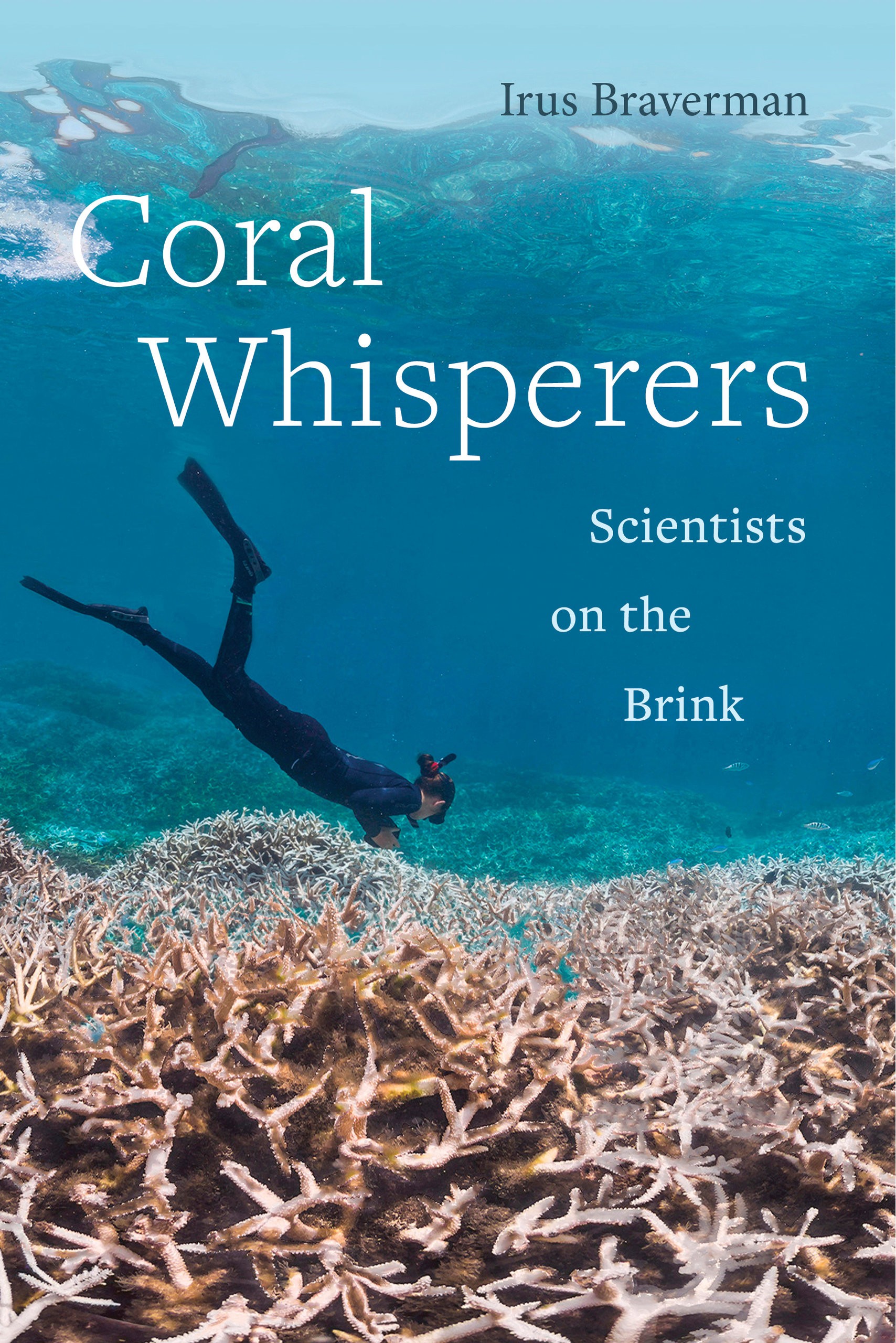
"Braverman uses the quotes from her witnesses well and the reader gains an often inspiring insight into the thought processes of scientists who are deeply concerned about one of the key ecosystems on the planet."
“Braverman’s highly readable, deeply informative and insightful account also serves as a trope for how science adapts to a situation in which reflection must quickly give way to dynamic, focused and effective action.”
"Through an impressive number of in-depth interviews with experts, Braverman is able to track important changes in coral science over the past decades, especially after massive bleaching events that served as catalysts for the implementation of numerous research and monitoring activities over the globe. . . . Coral Whisperers is an important read, a brave and extraordinary exploration of underwater life to understand the Anthropocene."
"...Braverman tackles a large-scale problem: global climate change and its impacts on coral reefs––including ocean warming and coral bleaching. Her work is not only about understanding what is happening to corals, but it is also about the effects of these environmental changes on coral scientists themselves. . . . The book contains a lot of information about coral ecology and biology as well as conservation policy and law. In doing so, it also offers a practical introduction to these topics, making it an excellent book for a course in environmental studies as well as appealing to those in STS."
"An instructive window into how others perceive the coral reef science community, and has value to both students and established researchers."
"Written in an accessible style that will appeal to both the avid scholar of science and technology and the merely coral curious, Braverman’s book is a great achievement of science studies, evocative of work by Paul Rabinow, Stefan Helmreich, Donna Haraway, and Anna Tsing. The book clearly sets up the problem of coral decline and recovery as an emblematic issue for the Anthropocene, guiding readers through what Braverman sees as the key points in the coral crisis: scientific oscillations between hope and despair, the unprecedented and increasing extent of coral decline, the growing phenomenon of coral restoration, the inadequacies of law and policy concerning corals, and the cutting edge of assisted evolution and coral bioscience."
“How to save the world’s dying coral reefs? Passionate advocates, original approaches, and surprising scholarship mean that all is not lost—yet. Compassionate, comprehensive, clear-eyed, and hopeful, Coral Whisperers deserves a very loud cheer!”—Sy Montgomery, author of The Soul of an Octopus: A Surprising Exploration into the Wonder of Consciousness
“Coral reefs are the single most vulnerable ecosystem on a warming planet, and in this volume we meet the remarkable people trying to prevent their total devastation. May this book move you to action!”—Bill McKibben, author of The End of Nature
“Reef corals are dying and scientists despair about what, if anything, can be done to save them. Irus Braverman brilliantly analyzes the emotional underpinnings of this debate and how deeply they will influence how science is done as the Anthropocene environmental crisis unfolds.”—Jeremy B.C. Jackson, coauthor of Breakpoint: Reckoning with America’s Environmental Crises
“Coral Whisperers offers a thoroughgoing inventory and expert assessment of the many scientific debates circulating around today’s beleaguered coral reefs. Braverman powerfully captures today’s urgent conversation about the future of some of Earth’s most remarkable ocean ecosystems.”—Stefan Helmreich, author of Alien Ocean: Anthropological Voyages in Microbial Seas
“Coral Whisperers provides a unique perspective on one of the existential problems of our time. Through interviews with a large number of coral reef scientists (and some managers), Braverman explores the current environmental crisis as it is affecting coral reefs, and its impact on the scientists themselves. It is rare to see a book about how scientists do their science, and about how their experiences affect them as people, as citizens, and as scientists. This is a significant contribution to documenting a critical time in the history of coral reef science and management, and to revealing scientists as real people.”—Peter F. Sale, author of Our Dying Planet: An Ecologist's View of the Crisis We Face