University of California Press

About the Book

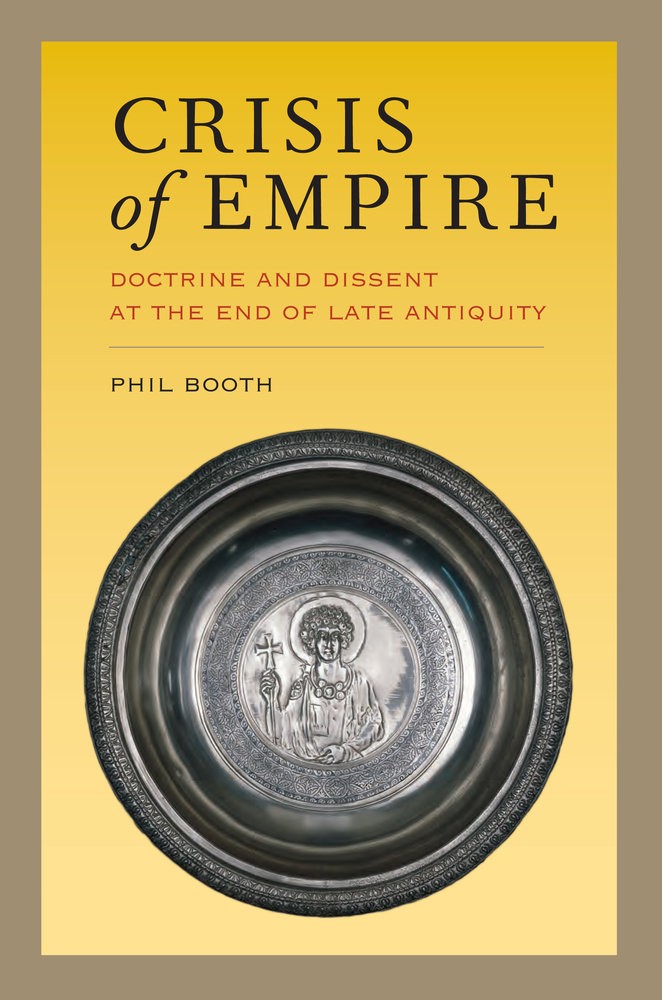
This book focuses on the attempts of three ascetics—John Moschus, Sophronius of Jerusalem, and Maximus Confessor—to determine the Church’s power and place during a period of profound crisis, as the eastern Roman empire suffered serious reversals in the face of Persian and then Islamic expansion. By asserting visions which reconciled long-standing intellectual tensions between asceticism and Church, these authors established the framework for their subsequent emergence as Constantinople's most vociferous religious critics, their alliance with the Roman popes, and their radical rejection of imperial interference in matters of the faith. Situated within the broader religious currents of the fourth to seventh centuries, this book throws new light on the nature not only of the holy man in late antiquity, but also of the Byzantine Orthodoxy that would emerge in the Middle Ages, and which is still central to the churches of Greece and Eastern Europe.

About the Author

Phil Booth is Leventis Lecturer in Eastern Christianity at Oxford University.

Table of Contents

Preface
Abbreviations

Introduction

1. Toward the Sacramental Saint
Ascetics and the Eucharist before Chalcedon  
Cyril of Scythopolis and the Second Origenist Crisis
Mystics and Liturgists  
Hagiography and the Eucharist after Chalcedon
 
2. Sophronius and the Miracles
Impresario of the Saints 
Medicine and Miracle 
Narratives of Redemption 
The Miracles in Comparative Perspective
 
3. Moschus and the Meadow
The Fall of Jerusalem 
Moschus from Alexandria to Rome 
Ascetics and the City 
Chalcedon and the Eucharist 

4. Maximus and the Mystagogy 
Maximus, Monk of Palestine 
The Return of the Cross 
The Mystagogy 

5. The Making of the Monenergist Crisis 
The Origins of Monenergism 
The Heraclian Unions 
Sophronius the Dissident

6. Jerusalem and Rome at the Dawn of the Caliphate 
Sophronius the Patriarch 
Jerusalem from Roman to Islamic Rule 
The Year of the Four Emperors 
From Operations to Wills 
Maximus and the Popes 

7. Rebellion and Retribution
Maximus from Africa to Rome 
The Roman-Palestinian Alliance 
Rebellion and Trial 
Maximus in Exile

Conclusion 
Bibliography 
Primary Sources
Secondary Sources
Index
Reviews

"Phil Booth has produced a magisterial book focusing on three crucial figures from Palestine who wrote in Greek in the early seventh century. Two of them played a central role in the huge issues of the period that saw the first Arab conquests; all three saw their world as that of the entire Mediterranean. Booth's demonstration of how sacramental spirituality, theology and politics were interlinked is a major achievement and a real breakthrough. The seventh century will never seem the same again."
—Averil Cameron, editor of Late Antiquity on the Eve of Islam

"Crisis of Empire is a fresh, provocative, and carefully revisionist interpretation of the extraordinary “monastic dissent” that challenged the imperial order in the turbulent seventh century in Byzantium.  Booth’s narrative brilliantly captures the drama of the alliances forged between monks, ecclesiastics, and provincial imperial officials in countering the christological positions assumed by emperors and Patriarchs of Constantinople.  This monograph will be of tremendous interest to Byzantinists and patristics scholars alike."
—Paul Blowers, author of Drama of the Divine Economy: Creator and Creation in Early Christian Theology and Piety

"Booth’s book showcases the political and religious roles of John Moschus, Sophronius of Jerusalem, and Maximus the Confessor, who have never before been treated together in this way. A compelling case is made for the position of the ascetic within the church, rather than on its fringes, against the continuous backdrop of the declining fortunes of the Christian Roman empire during the Persian and Arab advances.  This book is well-written, well-argued, and above all readable."
—Pauline Allen, author of Sophronius of Jerusalem and Seventh-Century Heresy

"Previous works on this crucial period of Byzantine history have tended to focus on material, legal or military history, at the expense of the important role of theology in the events that unfolded. Booth’s innovation is to make the sacramental understanding of the eucharist central to the political involvement of Maximus, Sophronius, and Moschus, whose collaboration is traced here for the first time."
Bronwen Neil, author of Seventh-Century Popes and Martyrs: The Political Hagiography of Anastasius Bibliothecarius