University of California Press

About the Book

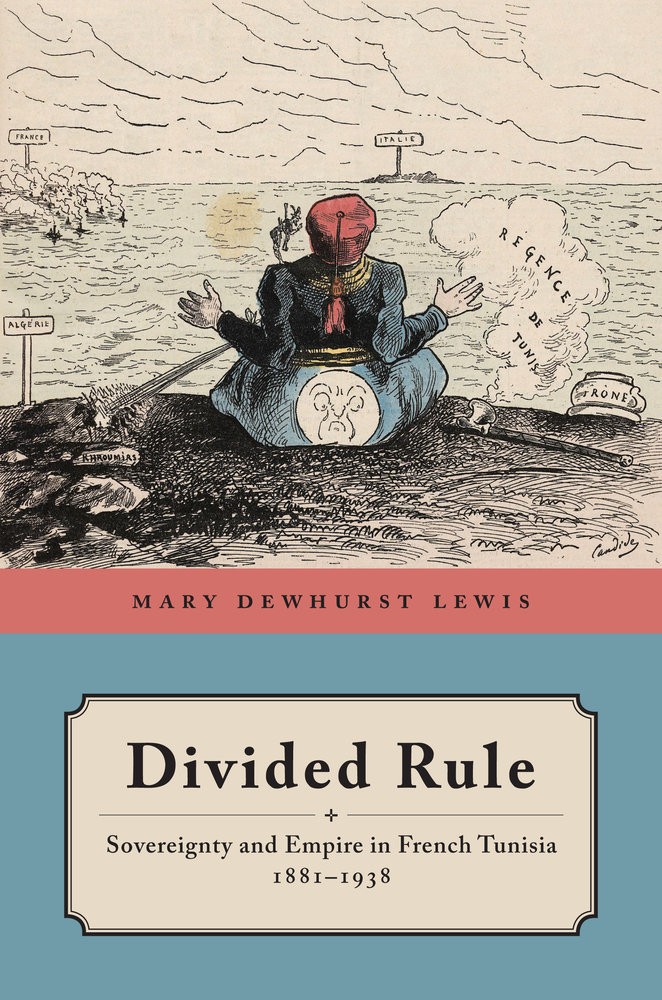
After invading Tunisia in 1881, the French installed a protectorate in which they shared power with the Tunisian ruling dynasty and, due to the dynasty’s treaties with other European powers, with some of their imperial rivals. This “indirect” form of colonization was intended to prevent the violent clashes marking France’s outright annexation of neighboring Algeria. But as Mary Dewhurst Lewis shows in Divided Rule, France’s method of governance in Tunisia actually created a whole new set of conflicts. In one of the most dynamic crossroads of the Mediterranean world, residents of Tunisia— whether Muslim, Jewish, or Christian—navigated through the competing power structures to further their civil rights and individual interests and often thwarted the aims of the French state in the process.

Over time, these everyday challenges to colonial authority led France to institute reforms that slowly undermined Tunisian sovereignty and replaced it with a more heavy-handed form of rule—a move also intended to ward off France's European rivals, who still sought influence in Tunisia. In so doing, the French inadvertently encouraged a powerful backlash with major historical consequences, as Tunisians developed one of the earliest and most successful nationalist movements in the French empire. Based on archival research in four countries, Lewis uncovers important links between international power politics and everyday matters of rights, identity, and resistance to colonial authority, while re-interpreting the whole arc of French rule in Tunisia from the 1880s to the mid-20th century. Scholars, students, and anyone interested in the history of politics and rights in North Africa, or in the nature of imperialism more generally, will gain a deeper understanding of these issues from this sophisticated study of colonial Tunisia.

About the Author

Mary Dewhurst Lewis is Professor of History at Harvard and author of The Boundaries of the Republic: Migrant Rights and the Limits of Universalism in France, 1918-1940 (Stanford University Press, 2007).

Table of Contents

Preface and Acknowledgments
Note on Arabic Spelling

Introduction
Chapter 1. Tunisia in the Imperial Mediterranean
Chapter 2. Ending Extraterritoriality?
Chapter 3. The Politics of Protection
Chapter 4. Contested Terrain: Redefining Sovereignty in Twentieth-Century Tunisia
Chapter 5. Over our Dead Bodies: Burial Rites and Sovereignty in 1930s Tunisia
Conclusion and Epilogue: From Co-Sovereignty to Independence 

Bibliography

Reviews

"This meticulously researched work . . . provides a meaningful contribution to the study of both modern European colonialism and North African history. Highly recommended."
Choice
"A thorough and creative analysis of the notion of sovreignity and its social practices in a colonized, legally pluralistic state."
Journal of Interdisciplinary History
"Perfectly integrated. . . [endowed] with a wealth of context that greatly enriches its comprehensibility and impressively displays the historian's art."
American Historical Review
"A fascinating analysis . . . compelling . . . [pays] attention to native populations' agency."
H-Net
"Lewis' analytical horizon is capacious . . . this [book] has profound implications for our understanding of imperialism . . . [a] great accomplishment."
H-Diplo Roundtable Reviews
"Ground-breaking . . . exemplarily rich and innovative . . . Divided Rule brings an important new contribution to the international and domestic legal sphere component of the French empire."
French History
"Here, Lewis’s extensive multilingual research in Tunisia, France, Britain and Italy is utilised to illuminating effect . . . Like any pioneering study, Divided Rule answers many questions but also implicitly poses new ones, offering scholars a broadly applicable framework that transcends the boundaries between colonial and metropolitan geographic spaces and the disciplinary divisions between social, legal and diplomatic histories.”
The Journal of Imperial and Commonwealth History
"An engaging and informative work blending social and diplomatic history." 
The Historian
"Divided Rule is a work of patience, perseverance, and dazzling insight. . . .Lewis achieves nothing less than a methodological breakthrough in the study of colonial domination."
Contemporary French Civilization
"Brilliant... [Mary Dewhurst Lewis'] findings have profound implications not only for the modern history of France and North Africa, but for the history of western colonialism more broadly."
French Politics, Culture & Society
"The author’s analysis of the beginnings of Tunisian nationalism in its thoroughly transnational context is even more vital in light of the country’s more recent history."
Journal of Modern History
“With a sharp analytical eye, Mary Lewis takes nothing for granted: she challenges conventional wisdom about the administrative practices, laws, regulations, and legal forms that supposedly underpinned French authority in protectorate Tunisia. Divided Rule is essential, a work of huge significance.” --Martin Thomas, Professor of European Imperial History, University of Exeter

“Based on extensive research in Tunisia, France, Italy, and Great Britain, this study by Mary Lewis provides an insightful and revealing portrait of the complexities of imperial governance. Lewis demonstrates how important Tunisia's status as a protectorate was, not just in international relations but also in its effects on marriage, property, inheritance, and other aspects of the daily life of Tunisians. She makes clear that as French officials tried to exercise closer control, Tunisians pushed back in new ways.” --Frederick Cooper, author of Colonialism in Question: Theory, Knowledge, History

“The result of prodigious research, Divided Rule explores the multiple and overlapping spheres of authority that structured life in Tunisia during the years in which that country existed as a protectorate of France. Lewis breathes new life into diplomatic history, shattering the false dichotomy that too often divides micro- and macro-studies. This book illuminates as much about the life of individuals in Tunisian society in the late nineteenth and early twentieth centuries as it does about the nature of the international power politics through which France engaged with the world.” --Sarah Abrevaya Stein, author of Plumes: Ostrich Feathers, Jews, and a Lost World of Global Commerce

“Divided Rule provides a groundbreaking account of the complex and fragmented legal landscape in Tunisia under French protectorate and explains how French incomplete sovereignty in Tunisia opened the way to a precocious nationalist movement. Mary Lewis brilliantly shows that the formation of the Tunisian nation in the nineteenth and twentieth centuries owes to states’ competition in the arena of imperial rivalries in the Mediterranean as much as to nationalism itself. This book is an indispensable reading for any student or scholar interested in the history of imperialism and nationalism.” --Malika Zeghal, author of Islamism in Morocco: Religion, Authoritarianism, and Electoral Politics