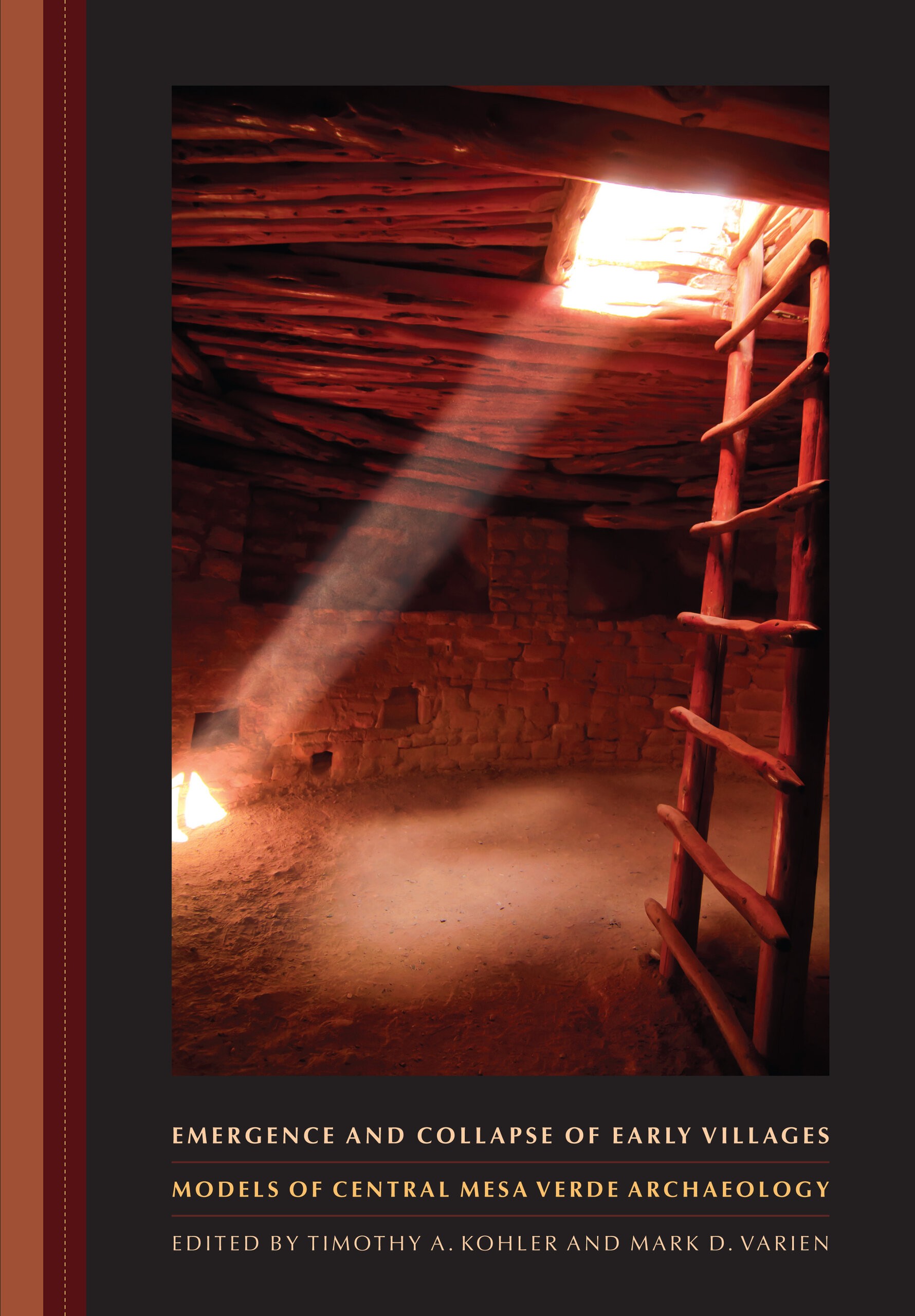
About the Book
Ancestral Pueblo farmers encountered the deep, well watered, and productive soils of the central Mesa Verde region of Southwest Colorado around A.D. 600, and within two centuries built some of the largest villages known up to that time in the U.S. Southwest. But one hundred years later, those villages were empty, and most people had gone. This cycle repeated itself from the mid-A.D. 1000s until 1280, when Puebloan farmers permanently abandoned the entire northern Southwest. Taking an interdisciplinary approach, this book examines how climate change, population size, interpersonal conflict, resource depression, and changing social organization contribute to explaining these dramatic shifts. Comparing the simulations from agent-based models with the precisely dated archaeological record from this area, this text will interest archaeologists working in the Southwest and in Neolithic societies around the world as well as anyone applying modeling techniques to understanding how human societies shape, and are shaped by the environments we inhabit.
Table of Contents
Preface and Acknowledgments
1
Emergence and Collapse of Early Villages in the Central Mesa Verde: An Introduction
Timothy A. Kohler and Mark D. Varien
2
The Study Area and the Ancestral Pueblo Occupation
Scott G. Ortman, Donna M. Glowacki, Mark D. Varien, and C. David Johnson
3
Low-Frequency Climate in the Mesa Verde Region: Beef Pasture Revisited
Aaron M. Wright
4
Simulation Model Overview
Timothy A. Kohler
5
Modeling Paleohydrologic System Structure and Function
Kenneth E. Kolm and Schaun M. Smith
6
Modeling Agricultural Productivity and Farming Effort
Timothy A. Kohler
7
Modeling Plant and Animal Productivity and Fuel Use
C. David Johnson and Timothy A. Kohler
8
Supply, Demand, Return Rates, and Resource Depression: Hunting in the Village Ecodynamics World
Jason A. Cowan, Timothy A. Kohler, C. David Johnson, Kevin Cooper, and R. Kyle Bocinsky
9
How Hunting Changes the VEP World, and How the VEP World Changes Hunting
R. Kyle Bocinsky, Jason A. Cowan, Timothy A. Kohler, and C. David Johnson
10
Exercising the Model: Assessing Changes in Settlement Location and Efficiency
Timothy A. Kohler, R. Kyle Bocinsky, Stefani Crabtree, and Ben Ford
11
Simulating Household Exchange with Cultural Algorithms
Ziad Kobti
12
Tool-Stone Procurement in the Mesa Verde Core Region Through Time
Fumiyasu Arakawa
13
Population Dynamics and Warfare in the Central Mesa Verde Region
Sarah M. Cole
14
Characterizing Community Center (Village) Formation in the VEP Study Area, A.D. 600-1280
Donna M. Glowacki and Scott G. Ortman
15
The Rise and Collapse of Villages in the Central Mesa Verde Region
Timothy A. Kohler
Bibliography
Appendix A
Appendix B
Notes on Contributors