University of California Press

About the Book

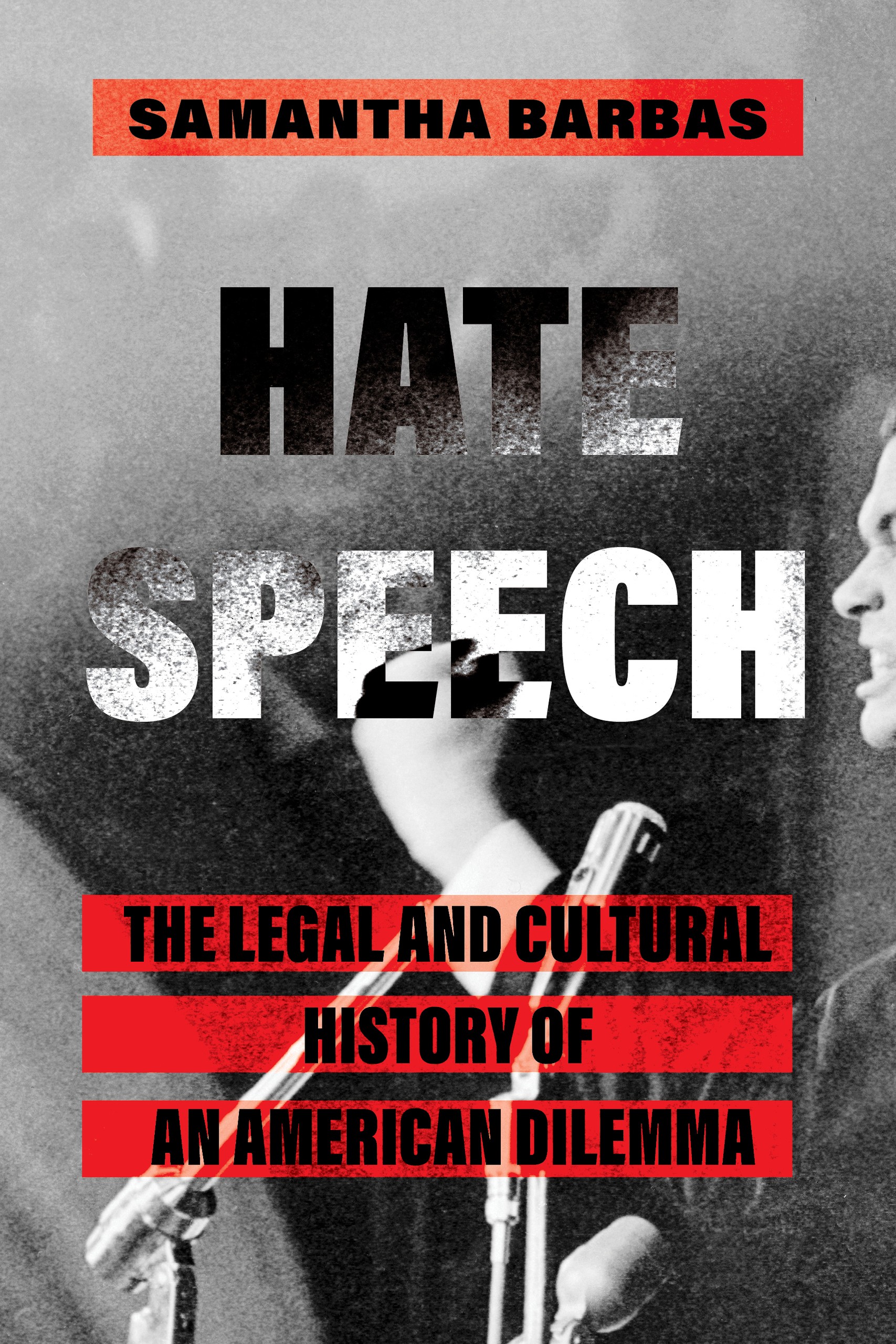
A history of the battles over regulation of hate speech in the United States.

The United States has no hate speech laws; hate speech is generally considered to be free speech under the First Amendment. In this crisp guided history, acclaimed legal historian Samantha Barbas chronicles the country’s legal and cultural battles over the regulation of hate speech in the last hundred years. Charting the historical context for current debates, she ultimately argues that, however emotionally appealing they may seem, hate speech laws undermine civil rights and democracy.

The American policy on hate speech evolved from influences such as the civil rights movement, which contended that the most effective way to combat hate speech wasn’t through proposed laws. Rather than imposing restrictions, the US has developed an array of mechanisms other than law, including counterspeech and public education, that have been relatively effective at dealing with hate speakers and hate groups. Though not perfect, our method of addressing hate is less dangerous than government censorship and less likely to be weaponized against the powerless.

About the Author

Samantha Barbas is Professor of Law and Aliber Family Chair at the University of Iowa College of Law and the author of seven previous books on mass media and free speech history, including Actual Malice: Civil Rights and Freedom of the Press in New York Times v. Sullivan.

Reviews

"Samantha Barbas powerfully demonstrates that hate speech restrictions are more harmful than the speech itself, especially endangering minority voices and views. Documenting how leading US civil rights groups have opposed such restrictions for undermining equal rights causes, the book provides an essential warning to the many current proponents of such restrictions."—Nadine Strossen, Former National President, American Civil Liberties Union, and author of Hate: Why We Should Resist It with Free Speech, Not Censorship

“Why does the First Amendment protect even hate speech? Few questions provoke more enduring controversy in American public life. To some, this protection reflects the wisdom of American free speech exceptionalism essential to democracy itself. To others, it is exhibit A in the weaponization of free expression against democratic equality. Barbas cuts through the noise with a lucid, authoritative, and deeply researched account of the events, actors, and ideas that produced the civil-libertarian conception of free speech that continues to shape First Amendment doctrine today.”—Jacob Mchangama, author of Free Speech: A History from Socrates to Social Media

"An accessible and learned chronicle that illuminates controversies pitting claims to freedom of expression against efforts to protect the dignity of vulnerable racial and ethnic groups. This conflict will be ongoing. Barbas’s volume provides excellent guidance to competing arguments and past resolutions."—Randall Kennedy, Michael R. Klein Professor of Law, Harvard Law School