University of California Press

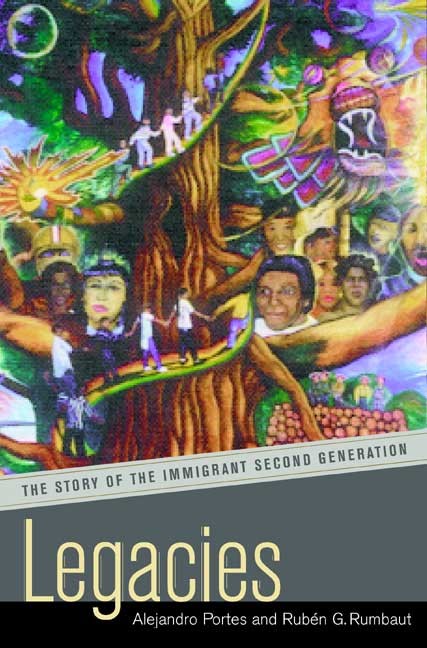
Legacies

The Story of the Immigrant Second Generation

by Alejandro Portes (Author), Rubén G. Rumbaut (Author)
Price: $33.95 / £29.00
Publication Date: May 2001
Edition: 1st Edition
Title Details:
Rights: World
Pages: 430
ISBN: 9780520228481
Trim Size: 6 x 9
Illustrations: 23 b/w photographs, 31 line figures, 50 tables

About the Book

One out of five Americans, more than 55 million people, are first-or second-generation immigrants. This landmark study, the most comprehensive to date, probes all aspects of the new immigrant second generation's lives, exploring their immense potential to transform American society for better or worse. Whether this new generation reinvigorates the nation or deepens its social problems depends on the social and economic trajectories of this still young population. In Legacies, Alejandro Portes and Rubén G. Rumbaut—two of the leading figures in the field—provide a close look at this rising second generation, including their patterns of acculturation, family and school life, language, identity, experiences of discrimination, self-esteem, ambition, and achievement.

Based on the largest research study of its kind, Legacies combines vivid vignettes with a wealth of survey and school data. Accessible, engaging, and indispensable for any consideration of the changing face of American society, this book presents a wide range of real-life stories of immigrant families—from Mexico, Cuba, Nicaragua, Colombia, the Dominican Republic, Haiti, Jamaica, Trinidad, the Philippines, China, Laos, Cambodia, and Vietnam—now living in Miami and San Diego, two of the areas most heavily affected by the new immigration. The authors explore the world of second-generation youth, looking at patterns of parent-child conflict and cohesion within immigrant families, the role of peer groups and school subcultures, the factors that affect the children's academic achievement, and much more.

A companion volume to Legacies, entitled Ethnicities: Children of Immigrants in America, was published by California in Fall 2001. Edited by the authors of Legacies, this book will bring together some of the country's leading scholars of immigration and ethnicity to provide a close look at this rising second generation.

A Copublication with the Russell Sage Foundation

About the Author

Alejandro Portes is Professor of Sociology at Princeton University and Director of the Center for Migration and Development, Woodrow Wilson School for Public Affairs. He is the coauthor of City on the Edge: The Transformation of Miami (California, 1993) and Latin Journey: Cuban and Mexican Immigrants in the United States (California, 1985). Portes is the 2010 recipient of the W.E.B. Du Bois Career of Distinguished Scholarship Award from the American Sociological Association. Rubén G. Rumbaut is Professor of Sociology at Michigan State University. He is coauthor, with Alejandro Portes, of Immigrant America: A Portrait (California, 1996), and the coeditor of Immigration Research for a New Century: Multidisciplinary Perspectives (2000) and Origins and Destinies: Immigration, Race, and Ethnicity in America(1996).

Table of Contents

List of Tables and Figures
Preface
Acknowledgments

1. Twelve Stories
Miami Stories
MarÌa de los Angeles and Yvette Santana: August 1993
Melanie Fernandez-Rey: September 1993
Aristide Maillol: August 1993
Armando and Luis Hern·ndez: July 1995
Mary Patterson: February 1995
EfrÈn Montejo: May 1994
San Diego Stories
Jorge, Olga, Miguel Angel, and Estela Cardozo: January 1994
Quy Nguyen: December 1987
Bennie and Jennifer Montoya: October 1995
Sophy Keng: November 1987 - June 1988
Yolanda and Carlos Muñoz: March 1994
Boua Cha: 1988 - 1990

2. The New Americans: An Overview
Immigration Yesterday and Today
The Size and Concentration of the Second Generation
Studying the New Second Generation: The Children of Immigrants Longitudinal Study
The New Second Generation at a Glance
Census Results
CILS Results

3. Not Everyone Is Chosen: Segmented Assimilation and Its Determinants
How Immigrants Are Received: Modes of Incorporation and Their Consequences
Acculturation and Role Reversal
Where They Grow Up: Challenges to Second-Generation Adaptation
Race
Labor Markets
Countercultures
Confronting the Challenge: Immigrant Social Capital
Parental Status, Family Structure, and Gender
The Immigrant Community
Conclusion

4. Making It in America
Early Adaptation and Achievement
General Trends
Nationality and Achievement
Determinants of Parental Economic Achievement
Interaction Effects
Nationality and Family Composition
Conclusion

5. In Their Own Eyes: Immigrant Outlooks on America
Aura Lila MarÌn, Cuban, 53, Single Mother (1994)
Pao Yang, Laotian Hmong, 57, Father (1995)
Optimism
Permissiveness
Ambition
Community and Pride
Conclusion

6. Lost in Translation:
Language and the New Second Generation
Bilingualism: Yesterday and Today
Shadow Boxing: Myth and Reality of Language Acculturation
General Trends
National Differences
Forced-March Acculturation
What Makes a Bilingual?
A Game of Mirrors: Language Instruction and Types of Acculturation

7. Defining the Situation: The Ethnic Identities of Children of Immigrants
Sites of Belonging: The Complex Allegiances of Children of Immigrants
Developing a Self
Past Research
Who Am I? Patterns of Ethnic Self-Identification
Ethnic Identity Shifts
Stability and Salience
Ethnic Self-Identities by National Origin
Where Do I Come From? Nation, Family, and Identity
Correlates of Self-Identities
Family Status, Composition, and Language
The Influence of Parental Self-Identities
Region, Schools, and Discrimination
The Race Question
Determinants of Ethnic and Racial Identities
Conclusion: From Translation Artists to Living Paradoxes

8. The Crucible Within: Family, Schools, and the Psychology of the Second Generation
San Diego Families
Family Cohesion, Conflict, and Change
School Environments and Peer Groups
Psychological Well-Being: Self-Esteem and Depressive Affect
School Engagement and Effort
Educational Expectations
Determinants of Psychosocial Outcomes
Self-Esteem and Depression
Ambition
Conclusion

9. School Achievement and Failure
Early Educational Achievement
Preliminary Results
Determinants of Early Achievement
Educational Achievement in Late Adolescence
Grades in Senior High School
Change over Time
Dropping Out of School
Two Achievement Paradoxes
Southeast Asians
Cuban Americans
Conclusion

10. Conclusion: Mainstream Ideologies and the Long-Term Prospects of Immigrant Communities
Two Mainstream Ideologies
A Third Way: Selective Acculturation and Bilingualism
The Mexican Case
Theoretical Reprise
Time and Acculturation
Reactive Ethnicity and Its Aftermath

Appendix A. Children of Immigrants Longitudinal Study:
Follow-up Questionnaire
Appendix B. Children of Immigrants Longitudinal Study: Parental Questionnaire
Appendix C. Variables Used in Multivariate Analyses: Chapters 6 to 9
Notes
References
Index

Reviews

"If Marx, Weber, and Durkheim were alive at the dawn of the 21st Century Legacies is the first book they would have to read to understand just what is at stake in the new immigration. This elegant book--theoretically precise, empirically robust, and analytically savvy--will become the standard by which all subsequent scholarship on the sociology of immigration will be measured. I am buying an extra copy today to send to the new President of the United States."—Marcelo M. Suárez-Orozco, Professor and Co-Director,The Harvard Immigration Projects, Harvard University

"Legacies is an indispensable guide to understanding how the children of today's immigrants will become the Americans of the 21st Century. For both scholars and the public, it should be essential reading, for it explains why today's approaches to ethnic incorporation will not only fail, but will backfire, yielding a second generation that is less assimilated than it might otherwise be."—Doug Massey, co-author of Worlds in Motion: Understanding International Migration at the End of the Millennium

"Using a unique storehouse of information, and telling a story with analytic precision and grace, Portes and Rumbaut provide a glimpse into the future that is now. Legacies is an important book, one that should be widely and carefully read."—Roger Waldinger, author of Still the Promised City? African Americans and New Immigrants in PostIndustrial New York

"Legacies demonstrates that there is more than one immigrant experience, and more than one second generation. It is a path-setting study, because the diversity among the most recent newcomers, and the varied ties and discontinuities between them and their children, will be the key to understanding race and ethnic relations in this country in the 21st Century."—John Logan, co-author of Urban Fortunes: The Political Economy of Place

"Portes and Rumbaut allow the diverse voices of the new second-generation immigrants to speak, both in vignettes of their life stories and in clear analytical accounts of their schooling, attitudes, and identities. The authors provide a compelling analysis that is both inspiring and troubling."—Charles Hirschman, co-editor of The Handbook of International Migration

"Legacies is itself a legacy--of one of the most ambitious projects ever undertaken to study the integration of the children of immigrants in a nation that styles itself as the nation of immigrants. Portes and Rumbaut have now donated the wealth of insights gained from this project to our common weal, and no one who cares about the American future can afford to ignore what they have to say. It deserves to be read and discussed not only by scholars but also by policymakers and the general public."—Richard Alba, author of Ethnic Identity: The Transformation of White America

"An extraordinary analysis of a contemporary condition that has not yet been fully recognized by our policymakers and commentators: The millions of second generation immigrants who will be a major part of our future. Portes and Rumbaut show the importance of developing intelligent policy."—Saskia Sassen, author of Guests and Aliens

Awards

  • Distinguished Scholarly Publication Award 2002, American Sociological Association
  • Princess of Asturias Prize in the Social Sciences 2019, Spanish Crown