University of California Press

About the Book

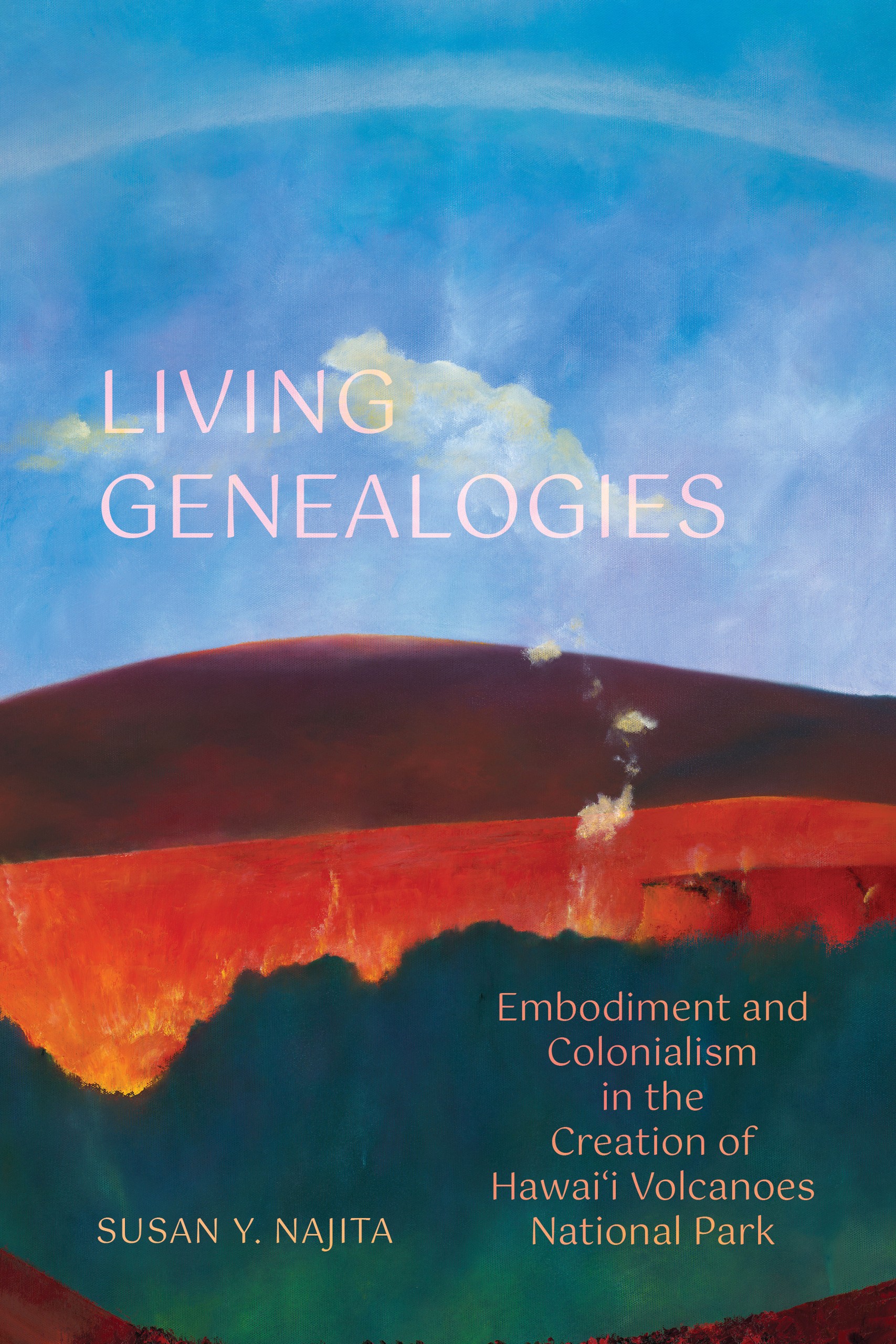
In this dynamic new analysis of colonialism and empire, Susan Y. Najita centers indigenous knowledge and embodied practice. This brings into clear focus the disruptions to creational and life-giving relationships between people, the more-than-human, and the environment. Living Genealogies focuses on the colonizing processes that led to the establishment of Hawai'i Volcanoes National Park on one of the most sacred places in the Pacific, the home of Pele, goddess of fire. Colonization works by severing ties to sacred life-giving places maintained through kinship and mutual thriving. In bringing together disparate fields of study—the volcano, the overthrow and annexation, and leprosy—with the embodied practice of sacred hula, Najita shows how genealogy is the basis for both critique and decolonial praxis. Reading the epic tale of Pele and her sister Hi'iaka-i-ka-poli-o-Pele teaches us about what Najita calls "genealogics," the connections that structure the reciprocal care and nurturing that form the basis of vibrant health of generations of living communities over time. In the end, Najita argues, we can look to this relationship of repair and mutuality as an answer to our wider health and environmental crises.

About the Author

Susan Y. Najita is Associate Professor in English and American Culture at the University of Michigan, Ann Arbor, where she first began exploring in Decolonizing Cultures in the Pacific (2006) the power of stories to intervene in the trauma of colonialism.

Table of Contents

Contents

List of Illustrations
Preface
Acknowledgments
Note to Reader on Hawaiian-Language (ʻŌlelo Hawaiʻi) Terms
List of Abbreviations

Introduction
1. “Genealogics”: Bodies and Language in Emerson and Hoʻoulumāhiehie
2. Cultural Logics in Conflict, 1870–1895: Leprosy, Health, and the Sovereign Land and Body
3. Kaʻao and Restorative Genealogics in Emerson’s Pele and Hiiaka
4. Making “Public” Lands: Early Land Acquisition for Hawaiʻi Volcanoes National Park
5. Empire and the Volcano: An Annexationist’s Perspective on the Science of Volcanology
Epilogue: Reverberations

Glossary
Notes
Bibliography
Index

Reviews

“A masterpiece derived from a deep dive into original Hawaiʻi archival resources and analyses of translated sacred Hawaiian text! This remarkable moʻolelo, or history, expertly weaves four disparate genealogical strands together: the violent separation, isolation, and experimentation of the victims of leprosy; the overthrow of the Hawaiian kingdom and incorporation into the United States; the expropriation of Hawaiian national and ancestral lands and commercialization of the sacred natural and dynamic life force of the volcano to create a national park; and the translation and perpetuation of hula texts sacred to the god Pele, the life force of the volcano. Susan Najita impressively engages the methods of literary analysis with her training in hula as a member of Hālau ʻŌhiʻa and her life experience as a keiki o ka ʻāina, or child of the land, to create a riveting and valuable history.”—Davianna Pōmaikaʻi McGregor, author of Nā Kuaʻāina: Living Hawaiian Culture

Living Genealogies offers a capacious, multi-angled, critical, and timely portrayal of this national site in an era of social contestation, struggle, and transformation. The dynamics of world-making are herein informed by a closeness to terms and values of an indigenous Hawaiian cosmos undergoing Americanization for tourist profit-making. This study elaborates how a “federally administered park” was carved out of Hawaiian homelands sacred to Pele and Hawaiian gods. Najita’s personal and familial history on the Big Island are invoked, embodied, reimagined, and critiqued along social and national lines of place-making. Legend, myth, history, and story become entangled forms of dwelling, inhabiting, and being. Najita, in effect, offers this study as a “makana aloha,” or gift of love, articulated across these social divides of colonial history. There is nothing quite like this: original, informed, vital, and necessary for grasping American and Hawaiian history.”—Rob Wilson, author of Oceanic Becoming: The Pacific Beneath the Pavements