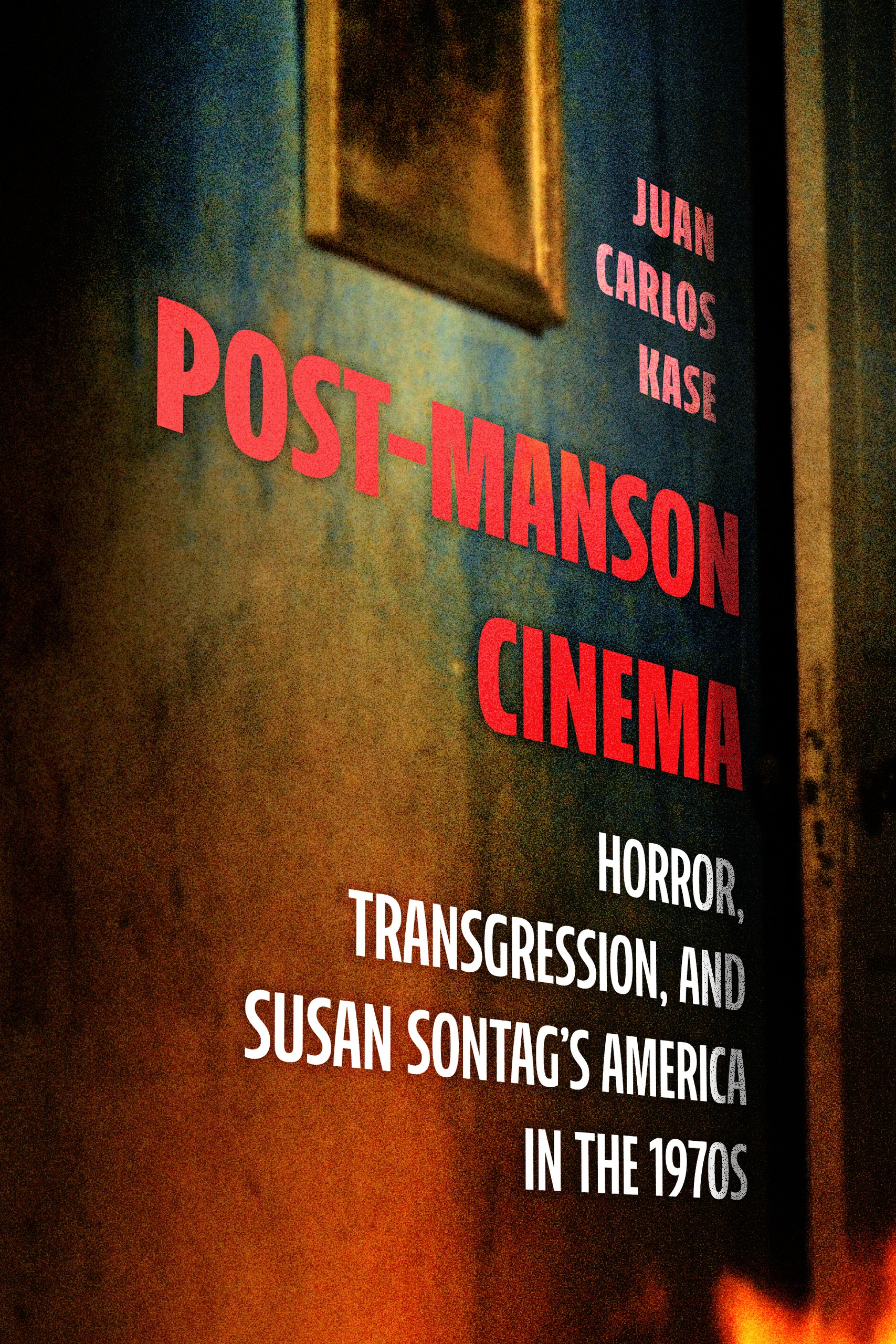
“Entering through the looking glass of a single obscure sentence in one of Susan Sontag’s diaries, film scholar Juan Carlos Kase returns with a whole alternative political-aesthetic history of the seventies, dawn of ‘the traumatic sublime.’ His ability to make unexpected connections rivals that of the master critic herself.”—John Jeremiah Sullivan, contributing writer for The New York Times Magazine and author of Pulphead: Essays
"Kase brilliantly animates a scrappy Susan Sontag aphorism to reconfigure the cultural impact of the violent mid-century moment that Manson came to epitomize. No more staring at the debris piling up at the end of the sixties: Post-Manson Cinema shows us a way forward through a wildly energetic landscape, the path lit by a constellation of cinematic shock and awe that, paradoxically, transforms our terror into thinking."—Claudia Verhoeven, author of Love and Terror: The Helter-Skelter History of the Manson Murders
"In this brilliant, trailblazing study, Kase takes as his point of departure Susan Sontag’s observation that The Texas Chainsaw Massacre was the most important American film of the 1970s as he dissects the cultural turmoil that displaced sixties-era utopianism. To better comprehend the decade's many intersecting cultural outrages, Kase provocatively juxtaposes Sontag's genius—informed by European intellectual culture—with Charles Manson and his terrifying refraction of US culture from psychedelics to the invasion of Vietnam. This book is a literary achievement of the highest importance.”—David E. James, Professor Emeritus of Critical Studies, School of Cinematic Arts, University of Southern California
“Post-Manson Cinema is a rare treat: a kind of academic detective story, which begins with a strange little hint that Juan Carlos Kase finds in Susan Sontag’s 1978 journal and then leads to all kinds of fascinating places. Kase conveys a real sense of wonder as he offers up not just a new way to think about film in the United States in the 1970s but something of an alternative history of the decade writ large."—Jeffrey Melnick, author of Charles Manson's Creepy Crawl: The Many Lives of America's Most Infamous Family