University of California Press
Publishing Services

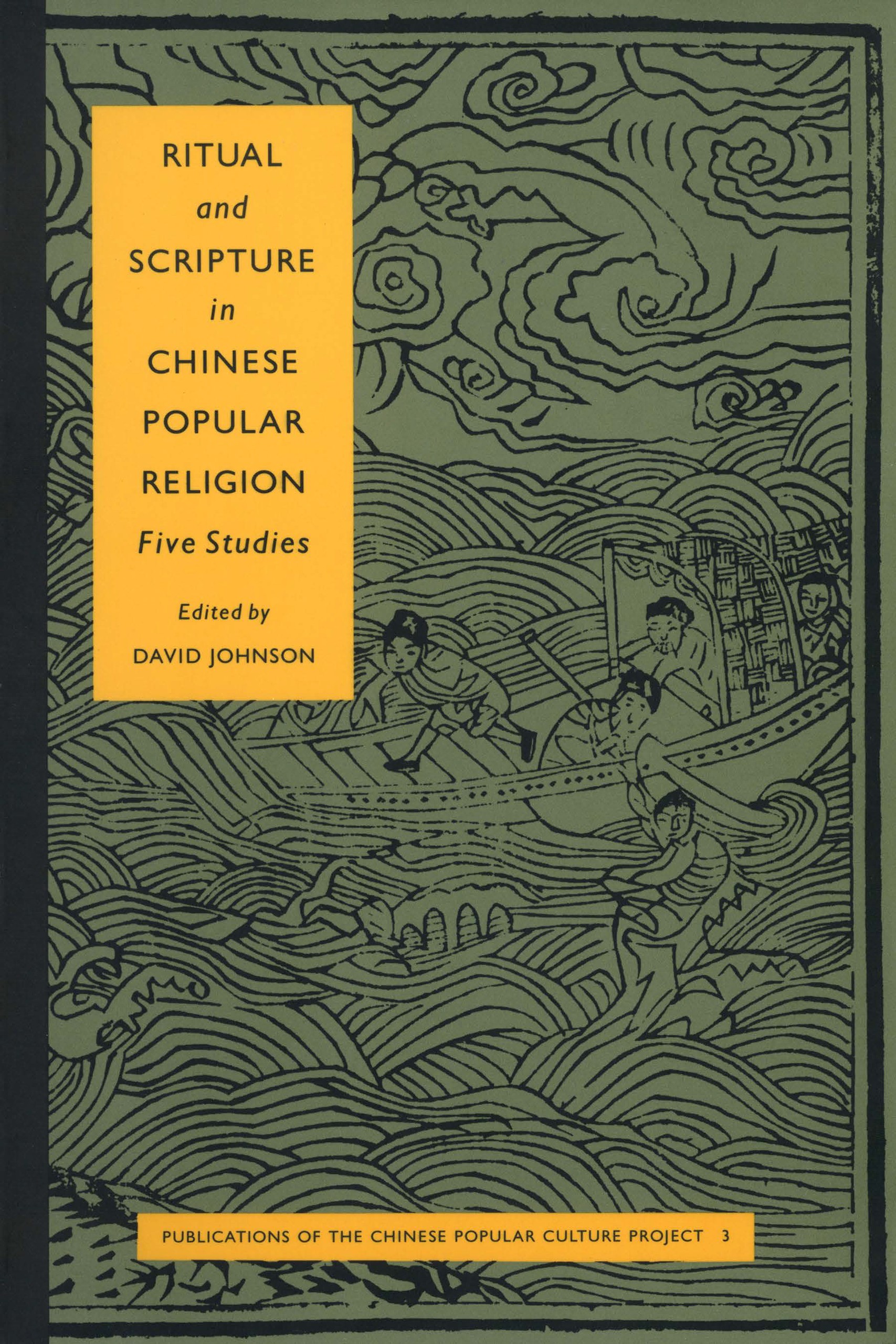
Ritual and Scripture in Chinese Popular Religion

Five Studies

by David Johnson (Author)
Price: $20.00 / £16.99
Publication Date: Jan 1995
Publisher:
Institute of East Asian Studies, University of California Berkeley
Imprint: Institute of East Asian Studies, University of California Berkeley
Title Details:
Rights: World
Pages: 282
ISBN: 9781557292063
Trim Size: 6 x 9
Series:
  • Chinese Popular Culture Project

About the Book

This volume grew out of a 1990 conference organized by the Chinese Popular Culture Project. The five papers included here address the distinction between popular religion as ritual practice and as textual scripture. Two large themes are the never-ending literati campaign to reform the religious practices and beliefs of ordinary people, and the blurring of the line between religion and entertainment.

About the Author

David G. Johnson is professor emeritus of history at the University of California, Berkeley. His research interests include premodern China and traditional Chinese popular culture. He is the co-author of Domesticated Deities and Auspicious Emblems (IEAS, 1992) and the author of Spectacle and Sacrifice: The Ritual Foundations of Village Life in North China (Harvard University Press, 2010). Education: A.B. at Harvard College; Ph.D. at the University of California, Berkeley

Table of Contents

Introduction—vii

Rituals and Scriptures of the Stove Cult—3
Robert L. Chard

Mu-lien in Pao-chuan: The Performance Context and Religious Meaning of the Yu-ming Pao-ch'uan—55
David Johnson

The Liturgies for Sacrifices to Ancestors in Successive Versions of the Family Rituals—104
Patricia Ebrey

The Cult of the Wu-t'ung / Wu-hsien in History and Fiction: The Religious Roots of the Journey to the South—137
Ursula-Angelika Cedzich

Language Adaptation in Taoist Liturgical Texts—219
Chinfa Lein

Glossary- Index—247

Reviews

"Taken as a whole, the papers in this volume represent a significant addition to our understanding of Chinese popular religion. The authors successfully grapple with many of the key issues confronting the field, such as the impact of elite representations on popular ones, the transmission of sacred texts throughout Chinese society, the degree of overlap between performative and literary versions of texts, and the interaction between Taoism and local cults."—Paul Katz, National Central University, China Review International 3, no. 2 (Fall 1996): 447-450

"[The] common theme is the relationship between popular religious practice and written religious traditions and the question of how these two modes of religion interacted....In sum, this volume of essays is an important contribution to the now rapidly developing study of Chinese popular religion, some of the rich variety of which is reflected in the variety of topics, materials, and approaches displayed by the five studies." —Philip Clart, University of British Columbia, The Journal of Asian Studies 55, no. 1 (Feb. 1996): 150-152