About the Book
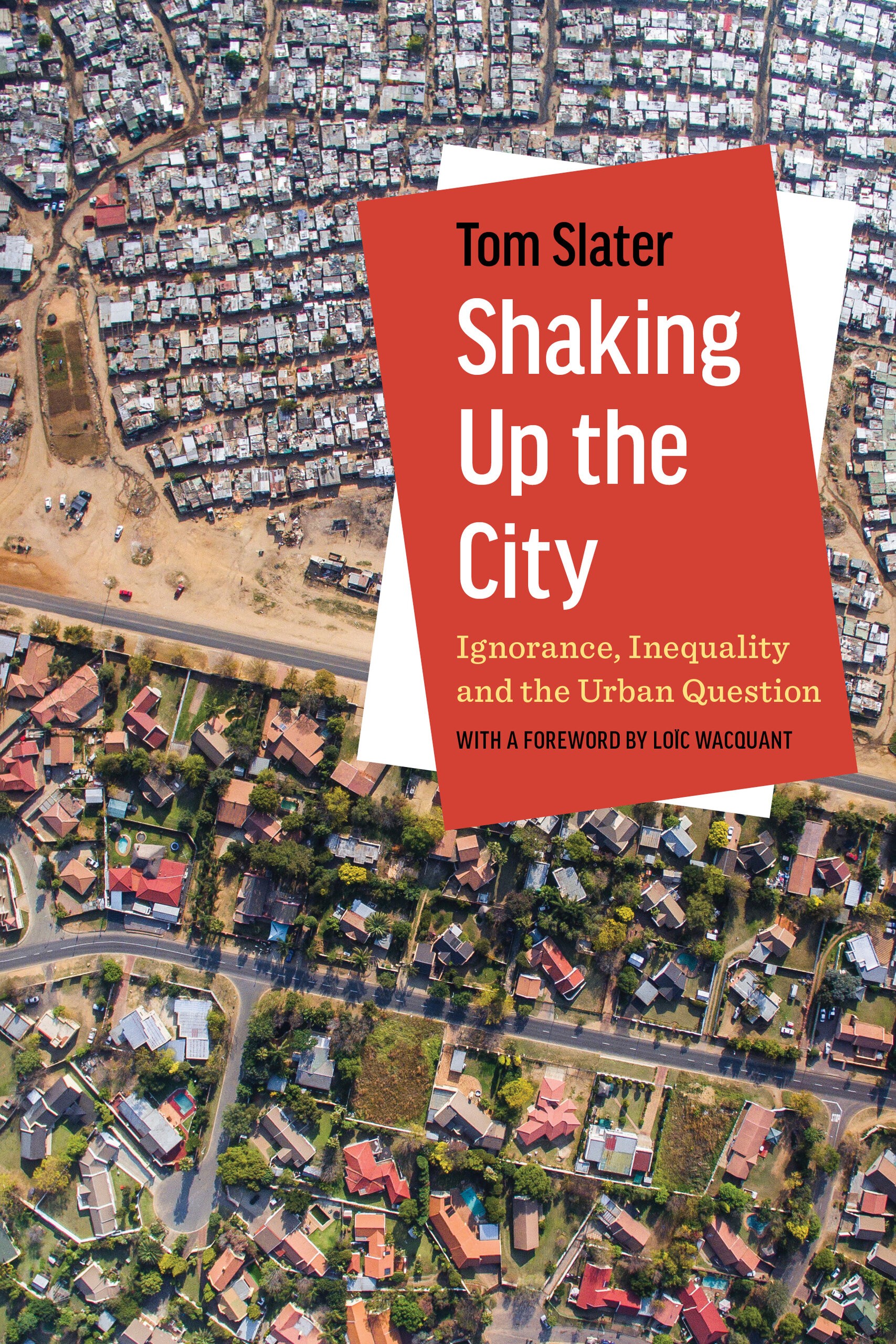
Shaking Up the City critically examines many of the concepts and categories within mainstream urban studies that serve dubious policy agendas. Through a combination of theory and empirical evidence, Tom Slater “shakes up” mainstream urban studies in a concise and pointed fashion by turning on its head much of the prevailing wisdom in the field. To this end, he explores the themes of data-driven innovation, urban resilience, gentrification, displacement and rent control, neighborhood effects, territorial stigmatization, and ethnoracial segregation.
With important contributions to ongoing debates in sociology, geography, urban planning, and public policy, this book engages closely with struggles for land rights and housing justice to offer numerous insights for scholarship and political action to guard against the spread of an urbanism rooted in vested interest.
Table of Contents
"A powerful, sobering wake-up call that demonstrates how policy-driven approaches to urban research—supported by think tanks, philanthrocapitalists, state elites, and big business—have led urban scholarship down a perilous path for more than three decades. Essential reading for anyone interested in tackling rampant inequality, epistemic violence, and social injustice."—Tanja Winkler, Associate Professor of Urban and Regional Planning, University of Cape Town
"A fierce, unflinching polemic against the extraction and alienation that create both urban injustices and the damaging cultures of orthodoxy so prevalent in urban scholarship today. Tom Slater’s incisive analysis demonstrates with sparkling clarity how words make worlds and silence is powerful. This brave book can steel our collective resolve to refuse the subordination of knowledge, and urban life itself, to political and economic profiteering."—Libby Porter, Professor at the Centre for Urban Research at RMIT University, Melbourne
"A brilliant critique of contemporary urban injustices and a powerful call for a more critically reflexive approach to urban social science. This book is essential reading for anyone concerned with superseding mainstream ideologies of urban renewal and developing modes of analysis to facilitate the pursuit of more democratic, equitable urban futures."—Neil Brenner, University of Chicago
“Completes and expands the legacy of what we can consider, now, as classic research in the general field of urban studies."—Virgílio Borges Pereira, Associate Professor of Sociology, University of Porto