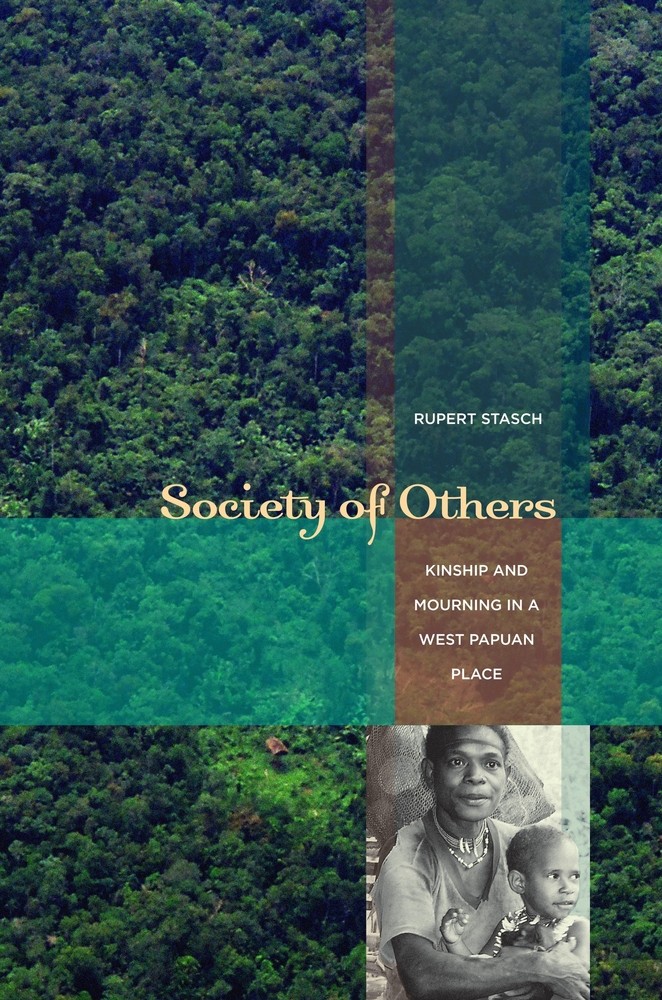
“A well-written and evocative ethnography of the treehouse-dwelling Karowai people of Papua New Guinea.”
“The volume shines as an example of that long-abused and misused genre: the ethnography that . . . sheds a bit of light on our common humanity. As an exemplification of the genre, it will be of wide interest to anthropologists regardless of area. . . . Simply must be read.”
“This book should be read by anyone interested in anthropology, since it forces us to think in new ways about the most central concepts of the discipline.”
“[An] innovative study based on an astonishing corpus of Korowai statments, comments, and observations.”
“A remarkable book, rich in detail and close to the described Korowai.”
"Meticulously researched, thoughtfully theorised and skilfully composed."
"In this timely commentary on the ideas of difference, strangeness, and Western contact, Stasch weaves ethnographic materials together with theoretical framing in an exceptionally clear and compelling way. A highly original, important and, in fact, astonishing piece of scholarship."—Bambi Schieffelin, author of The Give and Take of Everyday Life
"In this remarkable ethnography, Rupert Stasch takes us to the lowlands of West Papua and into the lives of people who have built a social world out of their relationships with strange and potentially dangerous others. The Korowai are classic inhabitants of the "savage slot," still dogged by their designation as Stone Age primitives. Instead of flipping the script and arguing that the Korowai are just like everyone else, Stasch draws far-reaching lessons from the particularities of Korowai life. Stasch writes with grace and clarity on the ambivalent ways in which the Korowai confront, evade, and embrace an otherness that resides not just in words, food, places, and human bodies, but also in the pasts and futures brought to mind by these material signs. Analyzing Korowai sign use as a concrete, historical process, he charts the passage between intimacy and alterity that Korowai undergo in their encounters not only with spirits and Indonesian soldiers, but also with children, husbands, and wives. Some of what Stasch describes may seem strange and even disturbing. But in pondering Stasch's findings, one gradually comes to see the making of persons and relationships in an entirely new light. Gone is the old debate between biological determination and cultural freedom; in its place is an approach that affirms the multiple histories that converge in and flow from a life. Erudite, empathetic, and unremittingly smart, Society of Others recasts the very meaning of kinship—and makes a case for the power of what anthropologists do."—Danilyn Rutherford, author of Raiding the Land of the Foreigners: The Limits of the Nation on an Indonesian Frontier