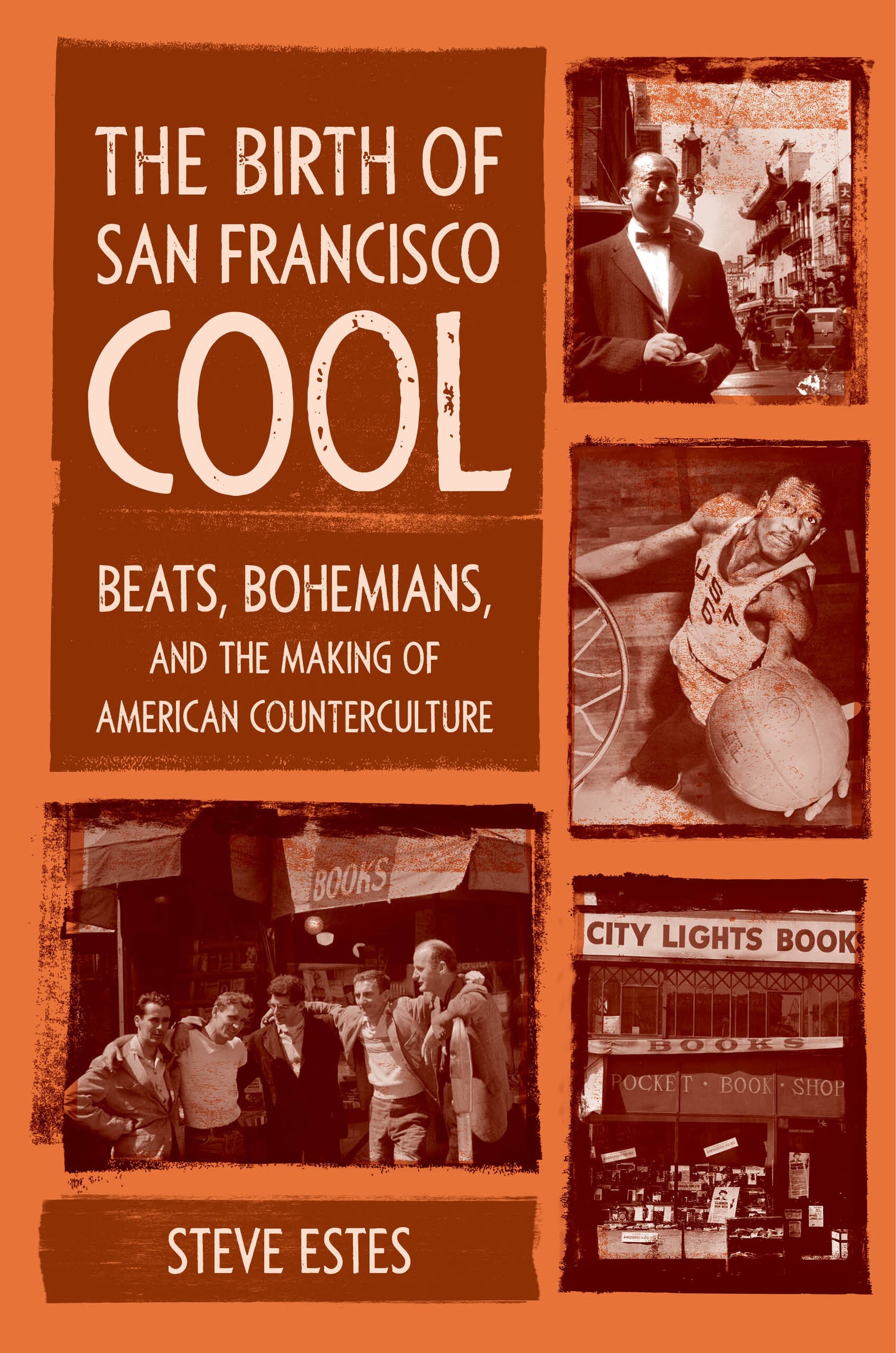
“Steve Estes assembles all the usual suspects for his new book about San Francisco’s countercultures, but he writes about them newly and freshly and makes them come alive for the first time. To them he adds new vital figures such as Chin Yang Lee, Bill Russell, Del Martin, and Phyllis Lyon and thereby launches his very cool book to the top of the list of innovative Beat books to read.”—Jonah Raskin, author of Keeping the Beat Alive and Isolato
“Estes takes readers on an intimate ride alongside Beat Generation writers (Kesey, Ginsberg, Cassady) and their milieu, returning again and again to San Francisco’s inspirational foggy hills. Estes infuses new life into well-worn stories about the pranksters that preceded San Francisco’s hippies and queers. This multidimensional biography puts San Francisco’s Chinatown, African American migrations, and early homophile organizations in conversation with Beat life and literary experimentation to ask: What kind of civilization is possible in this city at the edge of a continent? How were the hopes and dreams of an almost unrecognizable generation of writers and thinkers shaped by the city’s dramatic landscapes and unorthodox origins?”—Nan Alamilla Boyd, author of Wide-Open Town: A History of Queer San Francisco to 1965
“In The Birth of San Francisco Cool, Estes combines his talents for robust narrative history and sensitive interpretation of the American people. Painting the Beats and beyond, he renders a kaleidoscopic portrait of a city on the rise—a city whose people soon smack the national culture with a big, fat wallop.”—Aram Goudsouzian, author of King of the Court: Bill Russell and the Basketball Revolution
“We can draw a straight line from Jack Kerouac and Allen Ginsberg to the San Francisco counterculture of the 1960s. But as Estes shows, many other San Francisco writers, activists, and athletes joined the Beats in challenging that period’s rankest orthodoxies. This vivid portrait of the Beats and their peers—and especially their struggles for political, artistic, and sexual freedom—enriches our understanding of mid-century San Francisco and its broad cultural impact.”—Peter Richardson, author of Brand New Beat: The Wild Rise of “Rolling Stone” Magazine