University of California Press

About the Book

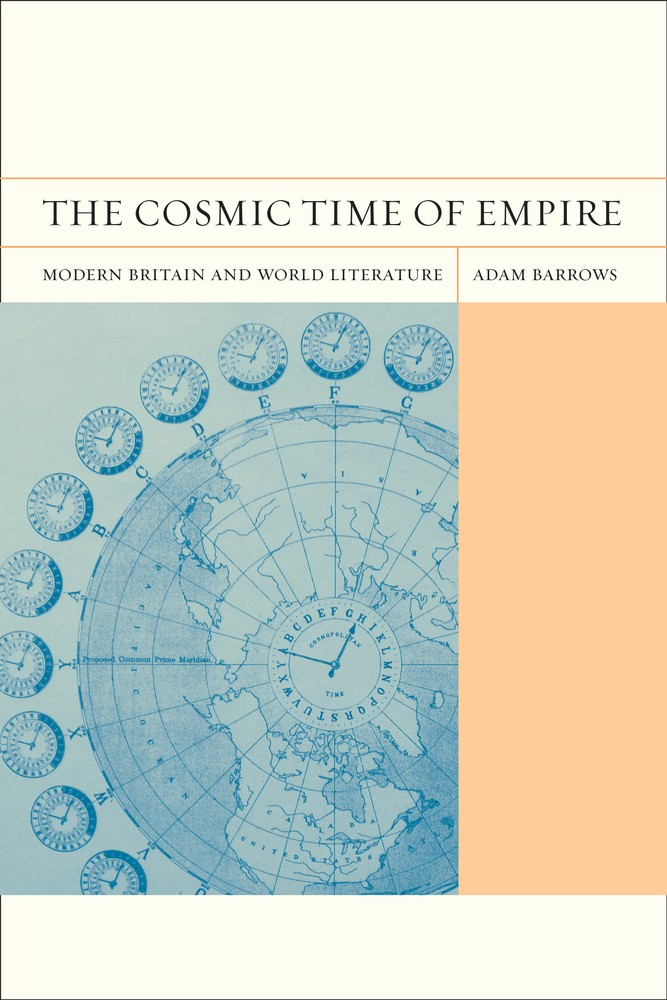
Combining original historical research with literary analysis, Adam Barrows takes a provocative look at the creation of world standard time in 1884 and rethinks the significance of this remarkable moment in modernism for both the processes of imperialism and for modern literature. As representatives from twenty-four nations argued over adopting the Prime Meridian, and thereby measuring time in relation to Greenwich, England, writers began experimenting with new ways of representing human temporality. Barrows finds this experimentation in works as varied as Victorian adventure novels, high modernist texts, and South Asian novels—including the work of James Joyce, Virginia Woolf, H. Rider Haggard, Bram Stoker, Rudyard Kipling, and Joseph Conrad. Demonstrating the investment of modernist writing in the problems of geopolitics and in the public discourse of time, Barrows argues that it is possible, and productive, to rethink the politics of modernism through the politics of time.

About the Author

Adam Barrows is Assistant Professor in the Department of English Language and Literature at Carleton University in Ontario, Canada.

Table of Contents

List of Illustrations
Acknowledgments

Introduction: Modernism and the Politics of Time

1. Standard Time, Greenwich, and the Cosmopolitan Clock
2. ""Turning from the shadows that follow us"": Modernist Time and the Politics of Place
3. At the Limits of Imperial Time; or, Dracula Must Die!
4. ""The Shortcomings of Timetables"": Greenwich, Modernism, and the Limits of Modernity
5. ""A Few Hours Wrong"": Standard Time and Indian Literature in English

Conclusion: A Postmodern Politics of Time? Negri's ""Global Phenomenological Fabric"" and Amis's Backward Arrow

Notes
Bibliography
Index

Reviews

“A lucid, thought-provoking study, and will be necessary reading for anyone concerned with the treatment of temporality in literature.”
Modern Language Review
“[Barrows] is rarely anything less than lucid. . . . The book is thoughtfully realised and impressively researched.”
Oxford Journal
"A major contribution to postcolonial and modernist studies. . . . The Cosmic Time of Empire stands as an ambitious, rewarding discussion."
KronoScope

Awards

  • Margaret Church Memorial Prize 2011, Modern Fiction Studies, Purdue University