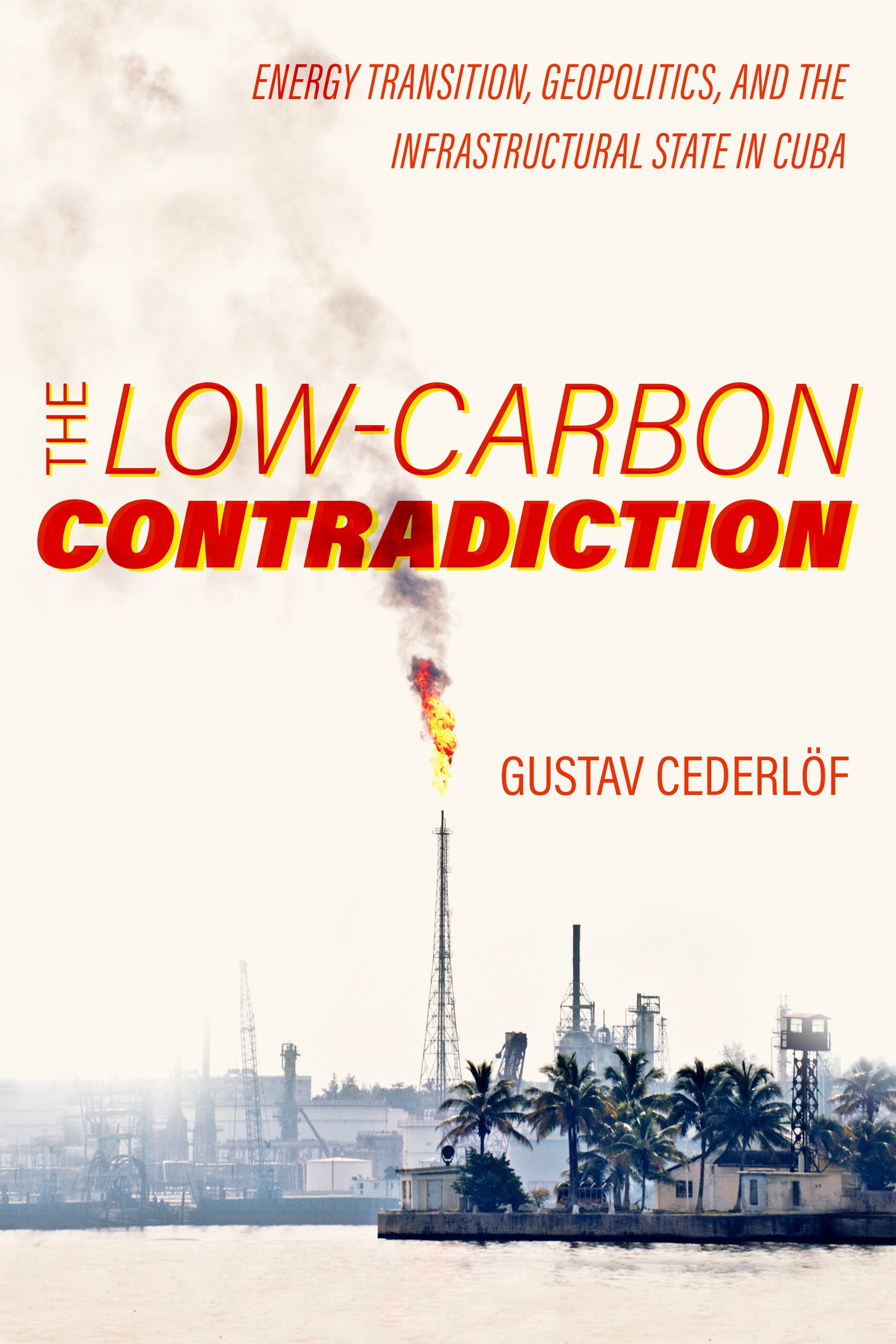
“Provides excellent descriptions of the series of technological and social changes that Cuba needed to install due to geopolitical changes.”
“Gustav Cederlöf deconstructs Cuba's energy pathway, providing unprecedented insight into a forced degrowth experience necessitating an energy transition. Cederlöf takes the reader on a journey through Cuba's revolutionary past and present, focusing on the changing energy imaginaries that have supported and legitimized Cuba's political economic projects to this day.”
"In this important study, Gustav Cederlöf explores what a radical energy transition might mean in practice. His analysis of the Cuban experience has multiple implications for our understanding of low-carbon futures and alternative forms of environmental discourse."—Matthew Gandy, Professor of Geography, University of Cambridge
"A cutting-edge analysis of the shifting and sometimes contradictory relation between the modernist growth imperative of Cuban socialism and the country’s fluctuating geopolitical access to energy. Supremely relevant to current deliberations on degrowth, eco-socialism, and low-carbon energy transitions."—Alf Hornborg, Professor Emeritus of Human Ecology, Lund University
"A remarkable book for the study of the 1959 Cuban revolution. Cederlöf analyzes the country’s electrification as core to the socialist development policies and the infrastructural and sociopolitical arrangements under the period of degrowth after 1991. His research enriches debates about transitions to a post-carbon society."—Reinaldo Funes-Monzote, author of From Rainforest to Cane Field in Cuba: An Environmental History since 1492
"The future of energy will be wrought with contradiction and this important contribution to just transitions brings us insights into possibilities of moving from fossil fuel dependence towards a low-carbon economy. This rich environmental history of Cuba’s special period tells a story that will inform ongoing debates about eco-socialism and degrowth."—Dustin Mulvaney, author of Solar Power: Innovation, Sustainability, and Environmental Justice