University of California Press

About the Book

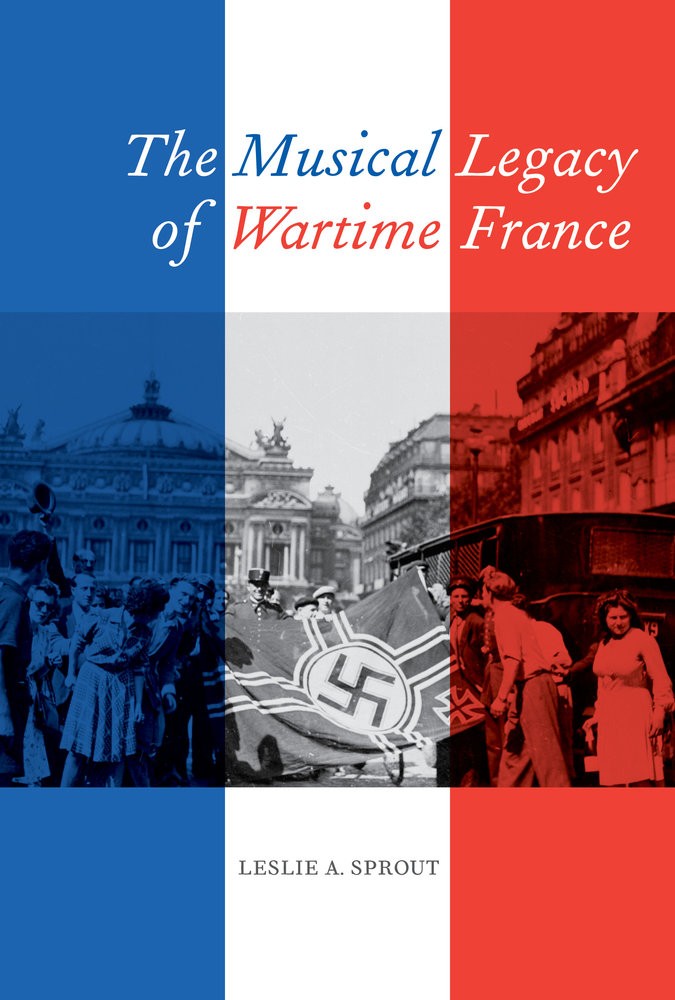
For the three forces competing for political authority in France during World War II, music became the site of a cultural battle that reflected the war itself. German occupying authorities promoted German music at the expense of French, while the Vichy administration pursued projects of national renewal through culture. Meanwhile, Resistance networks gradually formed to combat German propaganda while eyeing Vichy’s efforts with suspicion. In The Musical Legacy of Wartime France, Leslie A. Sprout explores how each of these forces influenced the composition, performance, and reception of five well-known works: the secret Resistance songs of Francis Poulenc and those of Arthur Honegger; Olivier Messiaen’s Quartet for the End of Time, composed in a German prisoner of war camp; Maurice Duruflé’s Requiem, one of sixty-five pieces commissioned by Vichy between 1940 and 1944; and Igor Stravinsky’s Danses concertantes, which was met at its 1945 Paris premiere with protests that prefigured the aesthetic debates of the early Cold War. Sprout examines not only how these pieces were created and disseminated during and just after the war, but also how and why we still associate these pieces with the stories we tell—in textbooks, program notes, liner notes, historical monographs, and biographies—about music, France, and World War II.

About the Author

Leslie A. Sprout is Associate Professor of Music at Drew University.

Table of Contents

List of Illustrations
Preface and Acknowledgments

1. Poulenc’s Wartime Secrets
2. Honegger’s Postwar Rehabilitation
3. Ignoring Jolivet’s Testimony, Embracing Messiaen’s Memories
4. The Timeliness of Duruflé’s Requiem
5. From the Postwar to the Cold War: Protesting Stravinsky in Postwar France

Notes
Bibliography
Index

Reviews

"...The depths of [Sprout's] knowledge and research show in her nuanced treatment of the subject. Summing Up: Recommended."
CHOICE Magazine
"The subject remains a minefield, but one that Leslie Sprout's relentless attention to evidence helps her negotiate nimbly in The Musical Legacy of Wartime France."
Times Literary Supplement
"This is a signi?cant contribution to the growing literature on Vichy-era music that deftly supports and complements its sister publications."
Fontes Artis Musicae
"A sensitive, challenging, painstaking, and perceptive study of the musical culture of one of the darkest periods of modern French history."
H-France Review
"A compelling study . . . The Musical Legacy of Wartime France successfully and eloquently interweaves debates about culture, politics, and the significance of attempts to get at historical truths, with musicological analyses."
The European Legacy: Toward New Paradigms
"Sprout’s book addresses a singular – and singularly compelling – period in modern French history, and does so with a remarkable degree of insight and nuance. It is bound to make an important contribution to twentieth-century music history."—Eric Drott, author of Music and Elusive Revolution


“Leslie A. Sprout has written a sophisticated and nuanced book about the complex realities of French culture under Nazi rule, and the relationships between music and politics. It is also an original and successful attempt to describe how the first representations of postwar times created long-lasting misconceptions on the past. Far from opposing history and memory, this book provides a comprehensive analysis of both historical realities and historical legends.”—Henry Rousso, Institut d’histoire du temps présent (Centre national de la recherche scientifique, Paris)