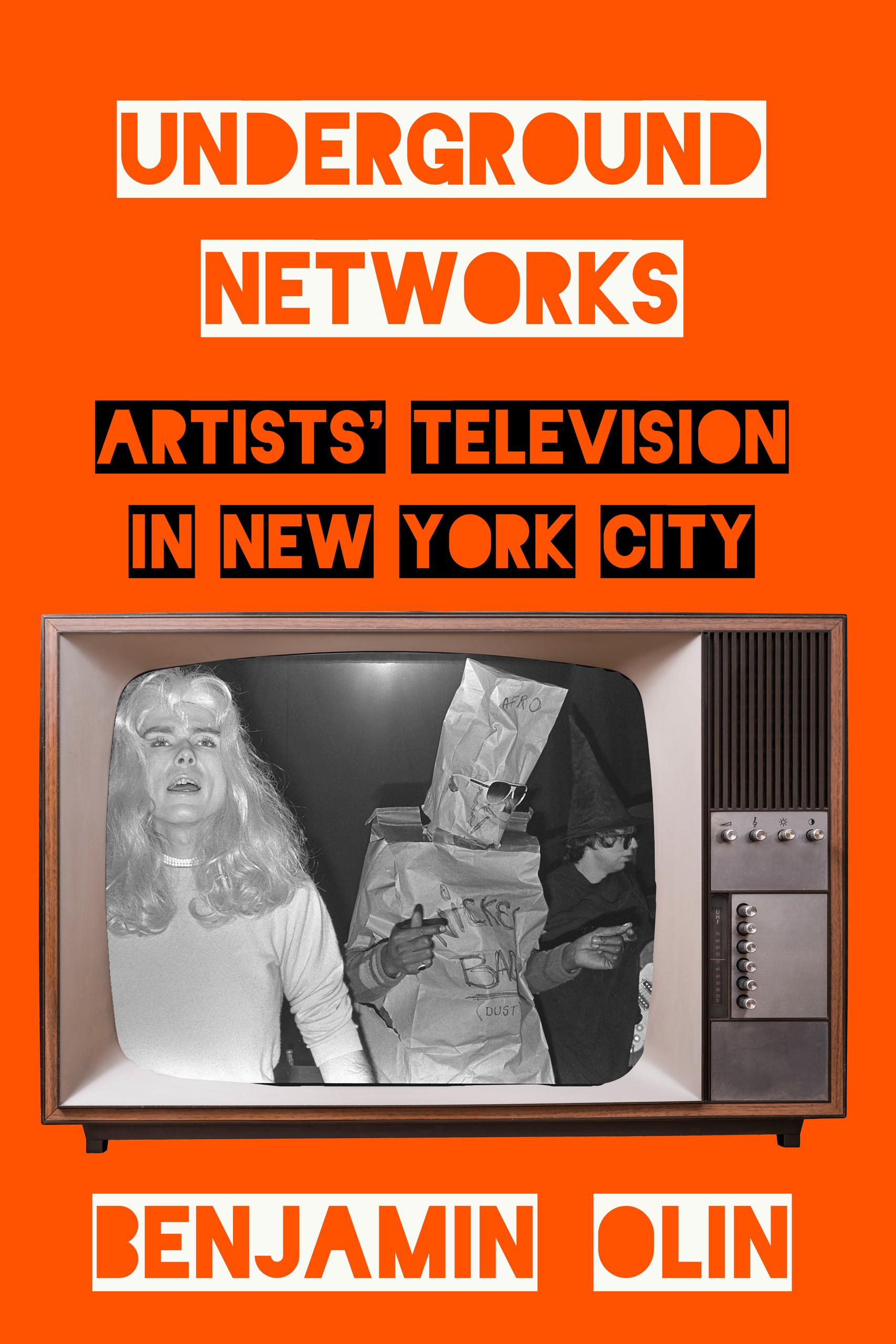
"Showcasing the surprising ways that artists, musicians, and writers experimented with public television in the 1970s and 1980s, this wonderfully compelling book maps new territories for the era's downtown scene."—Andrew Strombeck, coeditor of Avant-Gardes in Crisis: Art and Politics in the Long 1970s
"Benjamin Olin has written a deeply insightful appraisal of downtown Manhattan's public access cable television scene of the 1970s and 1980s. This book brings to light a little-studied phenomenon that is vital to understanding the art practice of an era. Generative and engaging, Olin's study is sure to inspire much research to come."—Vera Dika, author of The (Moving) Pictures Generation: The Cinematic Impulse in Downtown New York Art and Film "Expanding the bounds of film and media studies, Underground Networks provides the first sustained historical analysis of artists' television in New York City during the 1970s and 1980s. Olin skillfully illuminates this understudied work, revealing the previously hidden social and aesthetic threads tying together the era's artistic and literary subcultures."—Gregory Zinman, author of Making Images Move: Handmade Cinema and the Other Arts "Sure to become a very important reference in arts and television scholarship, Olin's pioneering study of the obscure phenomenon of artists making TV programs, peculiar to the 1980s downtown New York scene, is less about or versus television than searching for other means of expression and networking. Mainstream television is obviously a target—its comfortable language, its kitschy aesthetics, its indoctrinating power, its consumerist appeal—but the right way to look at these hybrid projects at the crossroads of avant-garde art and mass media is as heterotopias that allowed an emerging generation of downtown artists to pursue autonomy from both regular society and the commercial and institutional dynamics that regulated the art world."—Francesco Spampinato, author of Art vs. TV: A Brief History of Contemporary Artists' Responses to Television