University of California Press

About the Book

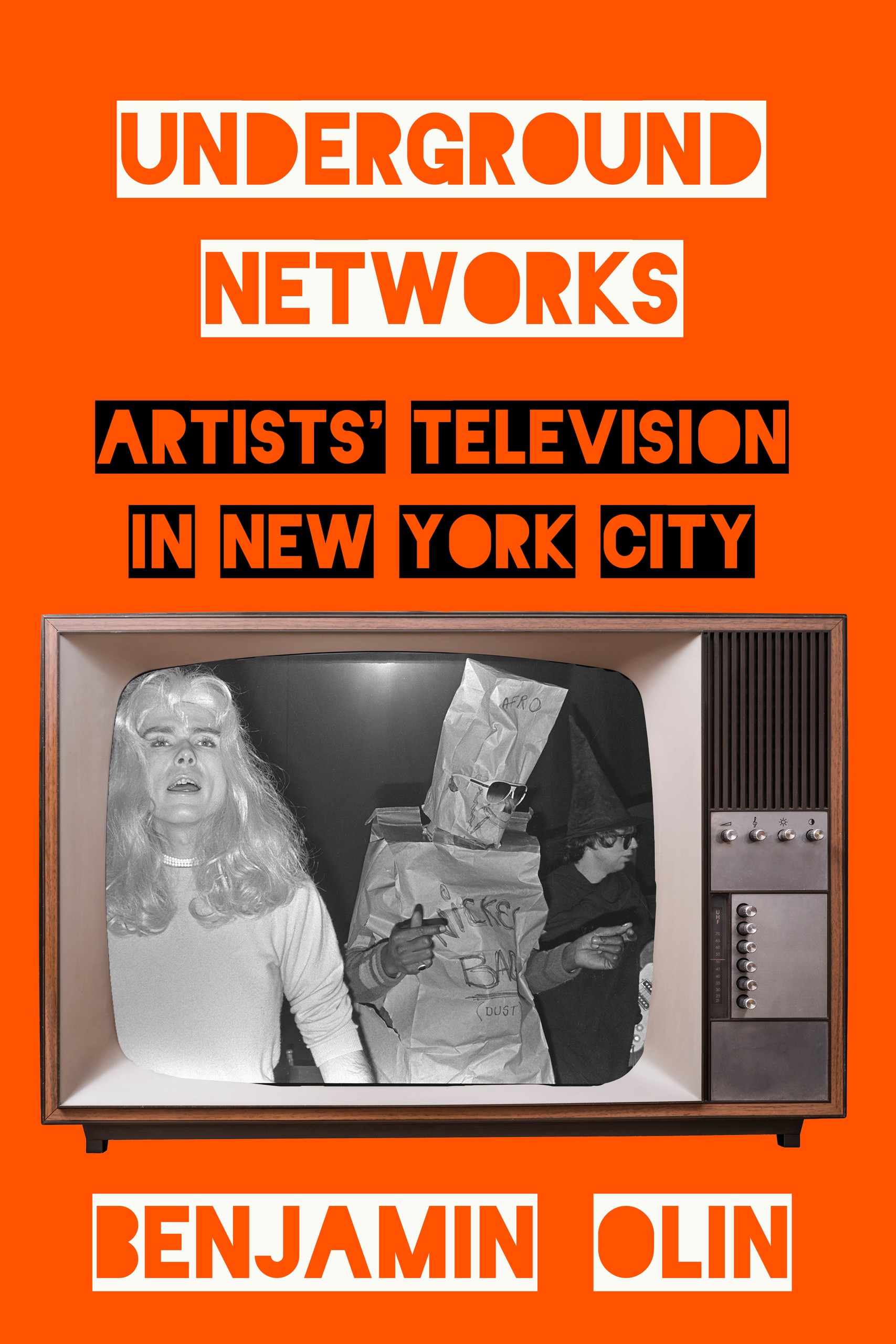
New York City’s downtown scene of the 1970s and 1980s is synonymous with underground film, video, and performance art. Many of the artists who would come to define this period also dabbled in the then-new technology of public access cable television, as host, producer, guest, or studio audience member. Drawing on archival research and personal interviews, this book—the first full-length study of this vibrant body of work—explores how poets, painters, and filmmakers produced talk shows and soap operas that warped the heteronormative conventions of primetime fare. Working outside the established art world, artists screened their shows in lofts and nightclubs, airing them live on Manhattan Cable and provoking frequent tabloid censure. Underground Networks affirms the importance of cable television to the downtown art scene and recovers an essential strand of avant-garde screen culture and a user-driven media ecology with uncanny contemporary resonance.

About the Author

Benjamin Olin is Assistant Professor of English Language and Literature at Hong Kong Shue Yan University, where he teaches literary, film, and cultural studies. His writing has appeared in Art JournalFramework, and Millennium Film Journal.

Table of Contents

Contents

Acknowledgments

Introduction: Tuning In to Artists’ Television

1. Lights Out: Anton Perich Presents and the Dragging of Primetime

2. New York School Dropouts: Public Access Poetry

3. Wiring the Scene: TV Party

4. Colab-TV: Networking the Art Collective

5. Downtown Goes Up: The Willoughby Sharp Show

Afterword: Myth Lab

Notes

Bibliography

Index

Reviews

"Showcasing the surprising ways that artists, musicians, and writers experimented with public television in the 1970s and 1980s, this wonderfully compelling book maps new territories for the era's downtown scene."—Andrew Strombeck, coeditor of Avant-Gardes in Crisis: Art and Politics in the Long 1970s
 
"Benjamin Olin has written a deeply insightful appraisal of downtown Manhattan's public access cable television scene of the 1970s and 1980s. This book brings to light a little-studied phenomenon that is vital to understanding the art practice of an era. Generative and engaging, Olin's study is sure to inspire much research to come."—Vera Dika, author of The (Moving) Pictures Generation: The Cinematic Impulse in Downtown New York Art and Film
 
"Expanding the bounds of film and media studies, Underground Networks provides the first sustained historical analysis of artists' television in New York City during the 1970s and 1980s. Olin skillfully illuminates this understudied work, revealing the previously hidden social and aesthetic threads tying together the era's artistic and literary subcultures."—Gregory Zinman, author of Making Images Move: Handmade Cinema and the Other Arts
 
"Underground Networks maps a long-neglected strand of downtown Manhattan moving image culture: artists' experimental television of the 1970s and 1980s. Rudimentary, rambunctious, and often polemical, the broadcasts of Anton Perich, the Colab collective, and Glenn O'Brien—among others—were ephemeral laboratories of aesthetic and social invention. They brought together artists and players whose legacies have remained obscured in great part because they chose to work in a transient, disparaged medium that failed to register on the radar of subsequent historians and critics. Olin's insightful, well-documented book finally gives them their due, changing forever our understanding of a cultural moment we thought we knew."—Juan A. Suárez, author of Experimental Film and Queer Materiality
 
"Sure to become a very important reference in arts and television scholarship, Olin's pioneering study of the obscure phenomenon of artists making TV programs, peculiar to the 1980s downtown New York scene, is less about or versus television than searching for other means of expression and networking. Mainstream television is obviously a target—its comfortable language, its kitschy aesthetics, its indoctrinating power, its consumerist appeal—but the right way to look at these hybrid projects at the crossroads of avant-garde art and mass media is as heterotopias that allowed an emerging generation of downtown artists to pursue autonomy from both regular society and the commercial and institutional dynamics that regulated the art world."—Francesco Spampinato, author of Art vs. TV: A Brief History of Contemporary Artists' Responses to Television
 
"Olin's revelatory study of artist-made narrowcast cable television radically revises the history of the New York downtown scene. By making this madcap, irreverent, and politically ambivalent mode of media a central arena for contemplation, Olin unearths a fascinating history that places TV at the heart of our understanding of experimental and underground culture. His examination of previously unseen archives and centering of artists and impresarios who are written about all too little, in combination with his clear-eyed, evocative prose, mean this study will go on to be a central text in New York art and media history."—Tom Day, Director, Yale Film Archive
 

"Underground Networks fills a gaping hole in the study of underground moving image culture by shining a spotlight on New York's wonderfully wild, category-defying, artist-led public access television productions. Its chapters offer close readings that are rich in detail, carefully researched, theoretically insightful, and simply a pleasure to read."—Marie Sophie Beckmann, author of Films That Spill: Beyond the Cinema of Transgression