University of California Press

Imagined Environments

The Making of the Borderlands

by Carlos Alonso Nugent (Author)
Price: $29.95 / £25.00
Publication Date: Nov 2026
Edition: 1st Edition
Title Details:
Rights: World
Pages: 378
ISBN: 9780520428188
Trim Size: 6 x 9
Illustrations: 48 b/w illustrations, 3 maps

About the Book

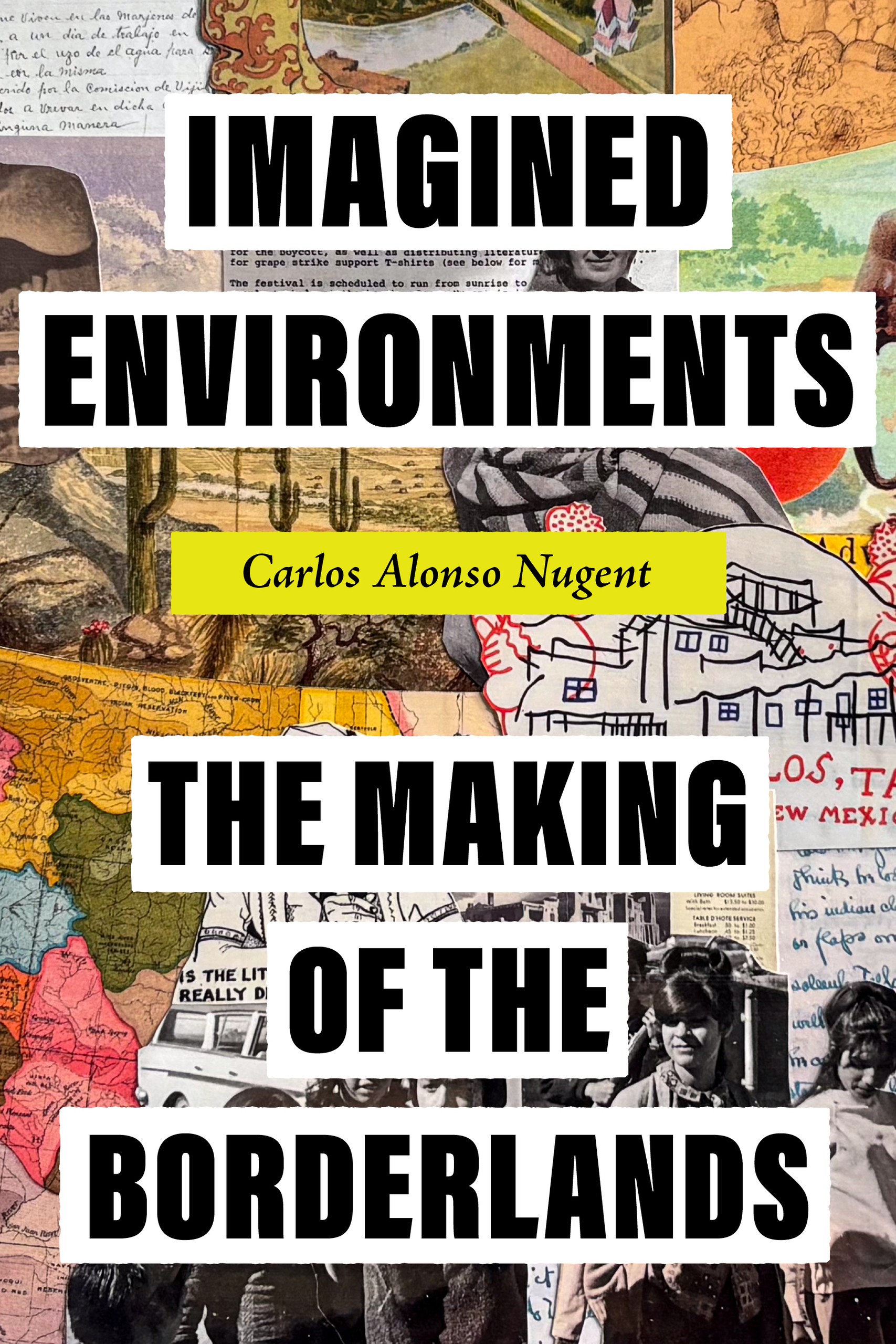
Casting light across the US-Mexico borderlands, Carlos Alonso Nugent reveals the region’s “imagined environments”—the frameworks through which its human groups have represented, related to, and resided in their more-than-human worlds. While these imagined environments can feel immersive and even immutable, Nugent explains how they have in fact emerged in everything from Apache pictographs to US and Mexican laws to novels, poems, paintings, and photographs. By showing how the larger imagined environments have shaped and been shaped by such cultural constituents, he revises accepted accounts of relational racialization. Advancing from 1848 to the present, he demonstrates that whiteness has coevolved with western water infrastructures, that Latinidades have developed through divergent forms of land tenure, and that Native nations have thrived not only by staying in specific places but also by migrating across vast spaces. With such stories, Nugent complicates the environmental humanities; even as he argues that media have naturalized our use and abuse of the planet, he still explores how they have helped us love places we have never been and care for creatures we have never met.

About the Author

Carlos Alonso Nugent is Assistant Professor at Columbia University, where he is appointed in both the Department of English and Comparative Literature and the Center for the Study of Ethnicity and Race.

Table of Contents

Contents

Preface

Introduction

Part One. The Many Maps of the Borderlands, from the End of the US-Mexico War to the End of the US-Apache Wars

1. Drawing and Disrupting Borders in the Wake of the US-Mexico War

2. Land and Latinidad During and After the California Gold Rush

Part Two. The Rise of Environmental Obliviousness, from Developing the Transcontinental Railroad to Detonating the First Atomic Bomb

3. Whiteness and/as Water Infrastructure Along the Colorado River

4. Primitive Landscapes Across Mass Culture and Modernism

Part Three. Latina/o Experiments in Environmental Awareness, from the Mexican Revolution to the NAFTA Era

5. Publics, Counterpublics, and the Fight for Lost Lands

6. Migrant Farmworker Media in the US-Mexico Food System

Conclusion: Reimagining Life and Death Under “Prevention Through Deterrence”

Notes

Bibliography

Index

Reviews

“Working across an impressive range of archival and primary sources, Carlos Alonso Nugent reveals the complex human and more-than-human processes involved in the making of the diverse lands, waters, skies, and communities we know as the US borderlands. This is the intersection of environmental humanities and critical border studies at its expansive and relational best.”—Chadwick Allen, author of Earthworks Rising: Mound Building in Native Literature and Arts and Transit: Serpent Mound Crossing Space, Time, Discourse

“Nugent reimagines the borderlands by disrupting supposed truths of the region. He reinvigorates discussions in ways analogous to Bolton and Anzaldúa, putting myriad sources into conversation as never before. Everyone interested in settler colonialism, race, nature, and the Southwest should flock to Imagined Environments.”—Rosina Lozano, author of An American Language: The History of Spanish in the United States

“A beautifully written, field-defining work that transforms the environmental humanities and critical race studies. By juxtaposing state archives with subaltern media, Nugent traces borderland struggles from 1848 to the present to expose the worldmaking power of literature, art, and grassroots activism. This is an essential read for anyone seeking uncommon ground in the American West.”—Raúl Coronado, author of A World Not to Come: A History of Latino Writing and Print Culture

“This is a stunningly original account of the borderlands since 1848. Drawing upon a wide archive of sources across genres, languages, and media, Nugent foregrounds how struggles to define border environments continue to reverberate. Simply put, there is no better environmental humanities scholarship on the border that has the scope, scale, and ambition of this book.”—Julie Sze, author of Environmental Justice in a Moment of Danger

“Nugent has written an erudite book, bristling with intelligence and humanity in its engagement with more-than-human worlds. This interdisciplinary study of the US-Mexico borderlands—and the imagined environments constructed by humans across time—will be a boon to many fields.”—Anna Brickhouse, author of Earthquake and the Invention of America: The Making of Elsewhere Catastrophe