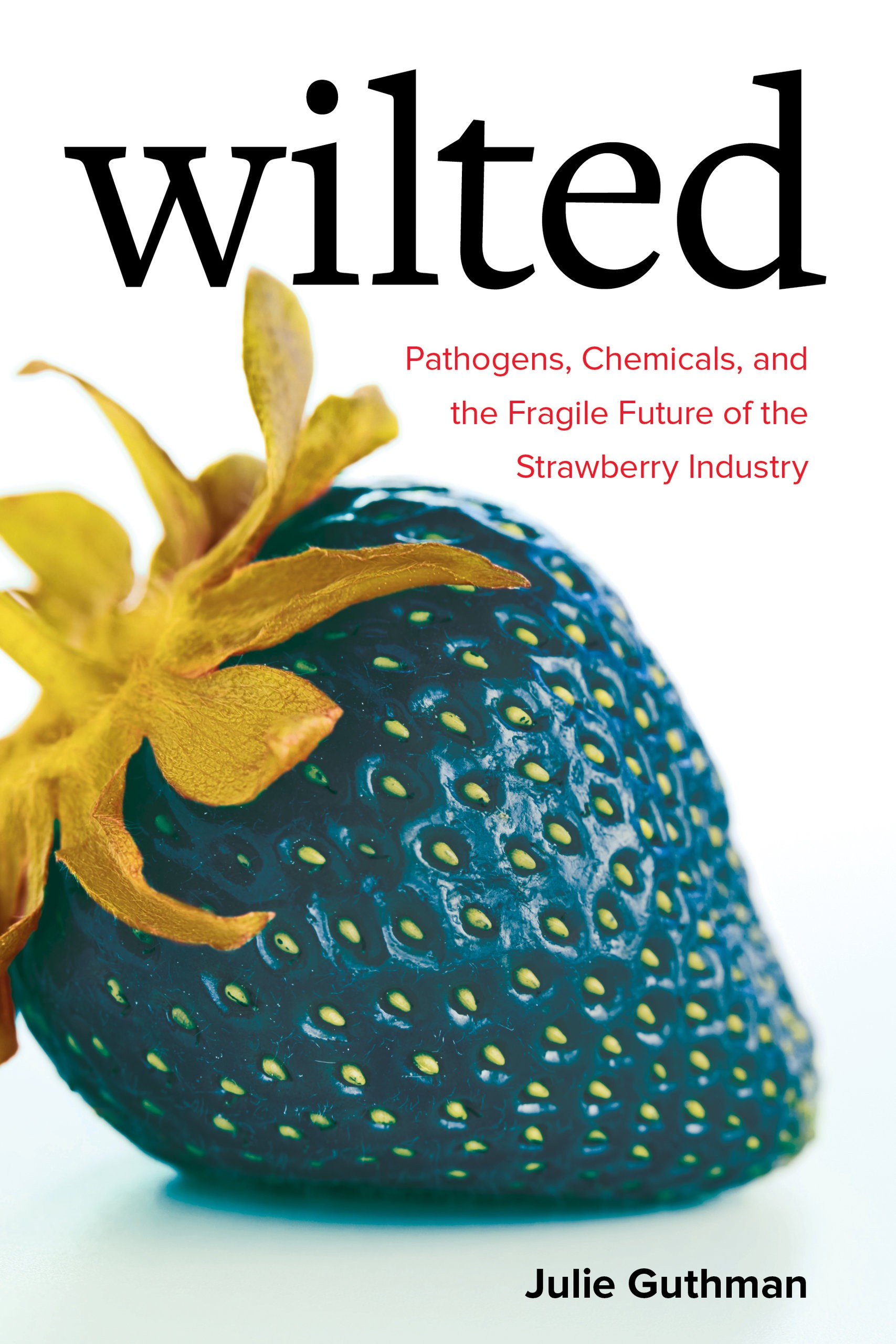
“Wilted is sure to prove a fascinating read for anyone (academic or lay audience) concerned with food and agriculture, and it provides methodological and conceptual insights to human–environment geographers more broadly. Given its accessible style and its effective presentation of complex ideas, it would be particularly valuable in an undergraduate course. Indeed, as a synthesis of Guthman’s path-breaking work in geographies of food and agriculture, Wilted is sure to serve as a resource for scholars interested in pursuing environmental research agendas that are critically grounded, historically informed, and politically relevant.”
"Remarkable. . . . As Guthman astutely argues, the ramifications of these findings permeate well beyond just strawberry fields and, in fact, demonstrate the fragility of industrial agricultural production in general."
"Why is it so difficult to stop using dangerous chemicals to grow strawberries? Wilted explains how fumigating strawberries against fungal pathogens became part of a package with strawberry breeding, university science, land values, powerful distributors, and vulnerable, poorly compensated labor. If you are looking for a critical, multispecies description of the plantation condition today, this is the book to read. You’ll also learn how strawberries have become something quite different than those your grandmother might have savored."––Anna Tsing, coeditor of Feral Atlas: The More-than-Human Anthropocene
"Julie Guthman, in the wake of her pathbreaking book Agrarian Dreams, now runs headlong into the agro-industrial monster of California’s strawberry fields. Wilted brilliantly exposes the deadly intersection of grower capitalism, agricultural expertise in the business of system restoration, and what Guthman calls the nonhuman entities and forces that both collaborate and interrupt the operations of the industry. It is contradictory, turbulent, fragile, and operating at the limits of repair. The strawberry ‘more-than-human’ assemblage stumbles and lurches forward, intransigent, durable, and seemingly unreformable, rushing toward the apocalypse. A tour de force."––Michael J. Watts, Professor Emeritus, University of California, Berkeley
"Julie Guthman’s new book elegantly ties together a complex of work, land, capital, ecology, and knowledge to present a rich and gripping analysis of the crisis in California strawberry production, and its possible futures."––Raj Patel, author of Stuffed and Starved: The Hidden Battle for the World Food System
"I couldn’t put this book down. By systematically unpacking the politics (and limits) of repair, Julie Guthman explains why industrial strawberries are both victim and perpetrator of the Anthropocene. I’ll never look at the fruit the same again!"––Michael Carolan, author of The Food Sharing Revolution: How Start-Ups, Pop-Ups, and Co-Ops Are Changing the Way We Eat